11 Innovative Mobile App Ideas for Startups in 2026
7 min read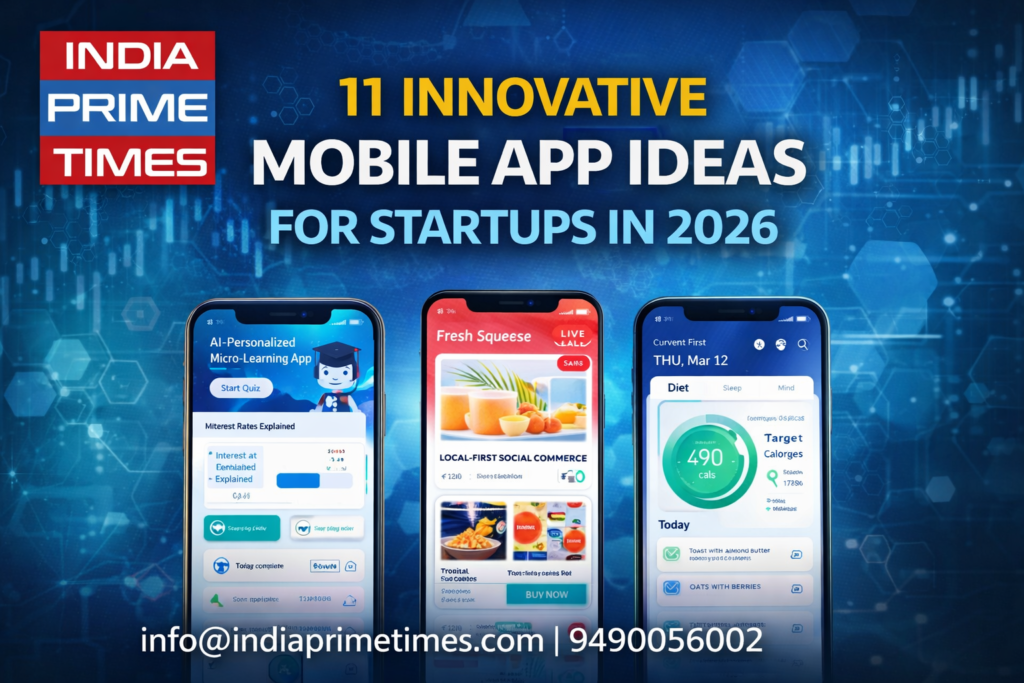
The mobile landscape is undergoing a radical shift. Driven by on-device machine learning (ML), stringent data privacy regulations, and a booming creator economy, the market now favors utility over endless scrolling. Today’s users demand applications that process data locally, offer hyper-personalized experiences via large language models (LLMs), and provide clear ROI through micro-subscriptions.
With the global app economy expanding rapidly, the opportunity for forward-thinking founders remains massive. If you want to capture market share, you need concepts grounded in emerging technical realities. This guide details 11 Innovative Mobile App Ideas for Startups in 2026. Below, we break down vetted, monetizable concepts complete with MVP features, traction levers, and 30–90 day pilot actions to help your team build and scale rapidly.
- AI-Personalized Micro-Learning App: Hyper-personalized short lessons powered by on-device LLMs.
- Local-First Social Commerce: Neighborhood marketplace optimizing live sales for underbanked merchants.
- Privacy-First Health Coach: Local data ML tracking diet and sleep with clinician integrations.
- Creator-Coaching Studio: Tools for creators to produce episodic content and offer paid micro-subscriptions.
- Augmented Retail Try-On: AR fitting rooms combined with product lifecycle and sustainability scoring.
- Decentralized ID Wallet: Verified credential and reputation system specifically for gig workers.
- On-Device AI Studio: Pro-level edits running locally for low-latency, privacy-safe content creation.
- Smart-Home Energy App: Grid-aware scheduling and dynamic tariff management for smart devices.
- Micro-Event Marketplace: Instant registration and discovery tools for local pop-up experiences.
- AI Legal Generator: Template-driven, region-specific contract creation with AI review triage.
- Voice-First Productivity Companion: Multimodal voice assistant tuned for hands-free workflows and meeting summaries.
1. AI-Personalized Micro-Learning App
Attention spans are shrinking, but the demand for rapid professional upskilling is peaking. By utilizing on-device LLMs, startups can deliver hyper-personalized, adaptive learning paths without incurring heavy cloud compute costs. Core MVP features:
- Dynamic onboarding quiz to assess skill levels.
- Adaptive, daily 5-minute text/audio lessons.
- AI-driven spaced repetition tracker for knowledge retention. Monetization & traction levers:
- Freemium model with premium specialized certification tracks.
- B2B enterprise licenses for corporate training. 30–90 day pilot plan:
- Day 1–14: Launch a single-topic web MVP using a basic API wrapper.
- Day 15–45: Acquire 100 beta users via targeted LinkedIn outreach.
- Metric to validate: Measure Day-7 active user retention to prove engagement.
- Example: [example: Duolingo mechanics adapted for customized AI professional tutors].
2. Local-First Social Commerce for Micro-Businesses
Hyper-local commerce is thriving as communities reject generic e-commerce. Micro-businesses need simple, mobile-first tools to sell directly to their immediate neighborhoods using live video and localized logistics. Core MVP features:
- Geo-fenced product discovery feed based on user location.
- Low-bandwidth live-stream capabilities for product demos.
- 1-click WhatsApp or UPI integration for frictionless checkout. Monetization & traction levers:
- Small percentage fee per successful transaction.
- Premium “boosted” visibility for local merchants. 30–90 day pilot plan:
- Day 1–14: Onboard 20 local merchants in a single high-density neighborhood.
- Day 15–45: Run a coordinated weekend live-sale event.
- Metric to validate: Track total Gross Merchandise Value (GMV) generated over the weekend.
- Example: [example: A localized version of Meesho tailored for neighborhood live-shopping].
3. Privacy-First Health Habit Coach
Consumers desperately want health tracking but fear data breaches. On-device processing keeps biometric and mental health data strictly on the user’s phone, offering insights without compromising privacy. Core MVP features:
- Daily mood, diet, and habit logging interface.
- On-device data analysis engine generating weekly insights.
- Secure, local PDF export function for sharing with clinicians. Monetization & traction levers:
- Monthly subscription for advanced biometric trend analytics.
- B2B integrations with telehealth platforms. 30–90 day pilot plan:
- Day 1–14: Build a basic tracker leveraging native Apple HealthKit or Google Fit APIs.
- Day 15–45: Recruit 50 users from privacy-focused Reddit communities.
- Metric to validate: Measure 30-day active usage and log frequency.
- Example: [example: Apple Health integrated with localized, private AI coaching].
4. Creator-Coaching & Revenue Share Studio
The creator middle class needs scalable tools to monetize their most loyal fans directly. This app allows creators to host cohorts and episodic video content behind seamless micro-paywalls. Core MVP features:
- Tiered content paywalls for episodic video releases.
- Built-in community chat for premium subscribers.
- Automated revenue splitting and payout dashboards. Monetization & traction levers:
- Platform takes a 5–10% transaction fee of creator earnings.
- Upsell premium analytics tools to top-tier creators. 30–90 day pilot plan:
- Day 1–14: Partner with 5 mid-tier creators (50k–100k followers).
- Day 15–45: Launch their first paid mini-cohort exclusively on the app.
- Metric to validate: Track average revenue generated per creator.
- Example: [example: Kajabi features combined with Patreon’s mobile-first experience].
5. Augmented Retail Try-On + Sustainability Score
Gen Z shoppers demand both digital convenience and eco-transparency. Combining AR try-on with verifiable supply chain data drives conscious consumerism while aggressively reducing costly e-commerce returns. Core MVP features:
- Camera-based AR try-on for accessories or footwear.
- Brand sustainability scorecard integrated into the product view.
- Direct affiliate checkout links. Monetization & traction levers:
- Affiliate commissions on driven sales.
- B2B SaaS listing fee for eco-friendly brands. 30–90 day pilot plan:
- Day 1–14: Integrate 3D assets from 3 partner eco-friendly brands.
- Day 15–45: Launch a targeted Instagram AR ad driving traffic to the app.
- Metric to validate: Track click-through rate (CTR) to purchase.
- Example: [example: Good On You paired with Snapchat’s AR fitting tech].
6. Decentralized Identity Wallet for Gig Workers
Gig workers lack portable reputations, starting from scratch on every new platform. A decentralized identity (DID) wallet lets them carry verified reviews and background checks across multiple marketplace ecosystems. Core MVP features:
- Encrypted local storage for credentials and ID documents.
- Verified review aggregator pulling from 2-3 gig platforms.
- Shareable, public-facing profile link for client verification. Monetization & traction levers:
- API access fee for gig platforms querying worker verification.
- Premium tier for workers requiring expedited background checks. 30–90 day pilot plan:
- Day 1–14: Map APIs for two major freelance platforms (e.g., Upwork, Fiverr).
- Day 15–45: Recruit 100 freelancers to consolidate their profiles.
- Metric to validate: Measure the credential share rate via public links.
- Example: [example: Web3 identity protocols practically applied to the gig economy].
7. On-Device Photo & Video Studio with Auto-Edit AI
Video creators need speed. Cloud-based rendering is slow and expensive. Leveraging the neural processing units (NPUs) on 2026 smartphones enables instant, privacy-safe, pro-level video edits completely offline. Core MVP features:
- Automated jump-cut editing for talking-head videos.
- On-device speech-to-text caption generation.
- Direct, low-latency export to TikTok, YouTube Shorts, and Reels. Monetization & traction levers:
- Freemium model with a watermark removal fee.
- Monthly subscription for advanced AI color grading and filters. 30–90 day pilot plan:
- Day 1–14: Launch an iOS beta leveraging native CoreML frameworks.
- Day 15–45: Test the workflow with 50 daily short-form creators.
- Metric to validate: Track export-to-publish speed and daily active usage.
- Example: [example: CapCut powered entirely by offline, local processing].
8. Smart-Home Energy Optimization App
Rising energy costs and grid instability make energy management a consumer priority. Apps that sync smart appliances with off-peak dynamic tariffs save users money and help stabilize local power grids. Core MVP features:
- Smart plug and thermostat API integrations.
- Dynamic tariff pricing dashboard showing real-time costs.
- Automated off-peak scheduling for heavy appliances. Monetization & traction levers:
- Lead generation fees from local solar or battery installers.
- B2B revenue from utility companies for demand response participation. 30–90 day pilot plan:
- Day 1–14: Integrate the app with one major smart thermostat API.
- Day 15–45: Run a 30-day trial with 50 localized households.
- Metric to validate: Calculate average monthly energy savings per user.
- Example: [example: Octopus Energy insights decoupled into a standalone, hardware-agnostic app].
9. Micro-Event & Pop-Up Experience Marketplace
Following years of digital saturation, users crave authentic, real-world connections. A hyper-local marketplace for impromptu suppers, workshops, and niche pop-ups perfectly caters to the experience economy. Core MVP features:
- Location-based, map-driven event discovery feed.
- Instant ticketing and QR code generation for hosts.
- In-app messaging between hosts and attendees. Monetization & traction levers:
- 5% transaction fee on all ticket sales.
- Promoted event placements for hosts seeking broader reach. 30–90 day pilot plan:
- Day 1–14: Focus on a single vibrant neighborhood and onboard 10 hosts.
- Day 15–45: Market the first 10 events via local Instagram micro-influencers.
- Metric to validate: Track the visitor-to-ticket-purchase conversion rate.
- Example: [example: Eventbrite optimized strictly for spontaneous, 10-person gatherings].
10. AI-Assisted Legal & Contract Generator for Startups
High legal fees block early-stage innovation. An app providing region-specific, AI-tailored standard contracts (NDAs, contractor agreements) democratizes legal access for solo founders and micro-businesses. Core MVP features:
- Conversational Q&A interface to generate custom contracts.
- Region-specific compliance templates.
- Instant PDF and Docx export functionality. Monetization & traction levers:
- Pay-per-document model for casual users.
- Monthly subscription for unlimited templates and e-signatures. 30–90 day pilot plan:
- Day 1–14: Launch a web-wrapper app featuring 3 core templates (NDA, SLA, Contractor).
- Day 15–45: Market the tool in local incubator and startup Slack groups.
- Metric to validate: Track the weekly document generation rate.
- Example: [example: LegalZoom enhanced with conversational, generative AI].
11. Voice-First Productivity Companion
Screen fatigue has reached critical mass. Multimodal AI allows users to manage tasks, draft emails, and summarize meetings entirely hands-free using natural voice interactions. Core MVP features:
- Always-on voice memo capture via lock-screen widget.
- AI summarization and action-item extraction from rambled thoughts.
- Seamless calendar and task-manager API integration. Monetization & traction levers:
- Premium subscription for extended audio processing limits.
- Enterprise team licenses for cross-collaboration. 30–90 day pilot plan:
- Day 1–14: Build an iOS Shortcut or basic app integration to capture audio.
- Day 15–45: Test the workflow with 20 busy executives or founders.
- Metric to validate: Measure daily voice activations per user.
- Example: [example: Otter.ai rebuilt as a proactive, task-executing personal assistant].
Conclusion
In 2026, the mobile app economy strongly favors platforms that blend privacy, on-device intelligence, creator enablement, and local commerce. The days of launching bloated apps and hoping for viral user acquisition are over. Success now requires solving specific, painful problems with elegant, lightweight technology.
For startups looking to capitalize on these 11 Innovative Mobile App Ideas for Startups in 2026, sequencing is critical. Pick one concept, define your core metric, and run the 30-day pilot plan. Measure the response, iterate quickly, and focus heavily on user retention before scaling your engineering spend. If your startup is building the next generation of mobile experiences, we want to hear from you.