20 Comprehensive Guides to Digital Transformation
9 min read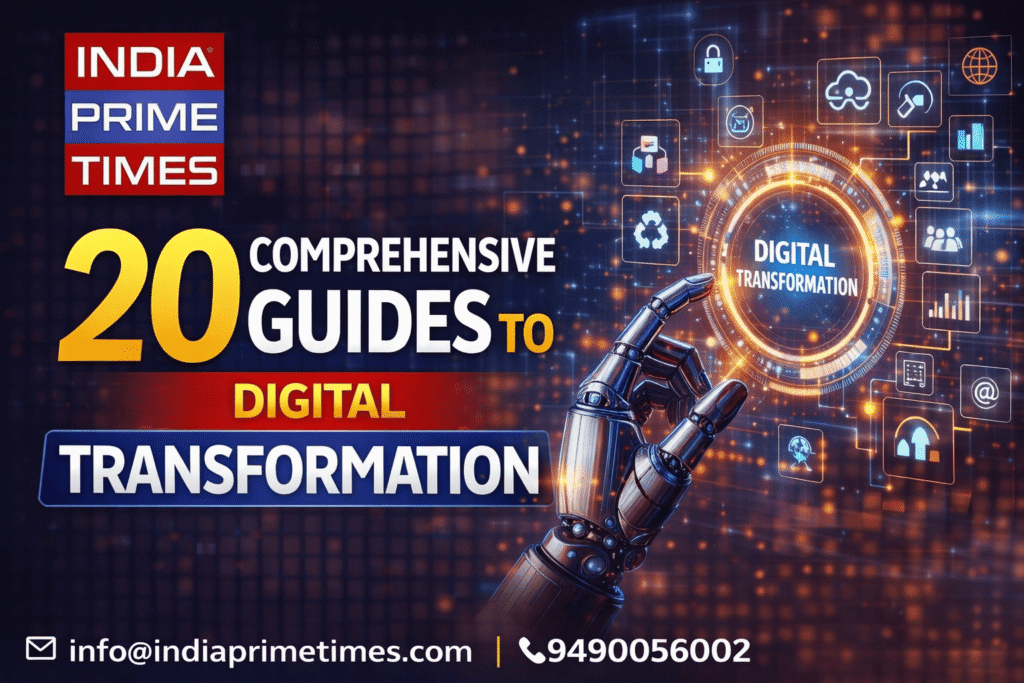
The phrase has been in circulation long enough to have acquired a certain fatigue, mentioned in boardroom presentations, cited in consultant reports, and discussed at industry conferences for the better part of a decade. Yet for all the words that have been written about digital transformation, a striking proportion of businesses remain at the beginning of the journey, unclear about where to start, what it actually involves, or how to measure whether it is working.
This confusion is both understandable and consequential. Digital transformation is genuinely complex, it spans technology infrastructure, organizational culture, leadership behavior, customer experience design, data architecture, and change management simultaneously. It affects every function in a business and requires sustained commitment from the top of the organization over a period of years. And unlike a technology implementation project, it does not have a clear completion date. It is, by nature, a continuous process of adaptation.
The 20 comprehensive guides to digital transformation presented in this feature are designed to address this complexity, not with abstract frameworks, but with practical, actionable guidance across every major dimension of the transformation journey. For business leaders, founders, and executives trying to understand what digital transformation actually requires and where to focus their energy, these guides collectively provide the most complete picture available in a single reading.
1. Building a Digital Transformation Strategy from the Ground Up
Every successful digital transformation begins with strategic clarity, a specific articulation of what the organization is trying to achieve through transformation, why it matters, and how progress will be measured. This guide addresses the foundational questions: How do you assess your current digital maturity honestly? How do you identify the highest-value transformation opportunities specific to your business model? How do you develop a roadmap that is ambitious enough to create real competitive advantage but realistic enough to maintain organizational commitment over time?
The strategic foundation must connect digital investment directly to business outcomes, not technology capabilities in the abstract, but specific improvements in customer acquisition, operational efficiency, product quality, or market reach that the transformation is designed to deliver.
2. Leadership’s Role in Driving Digital Change
Digital transformation consistently fails without visible, sustained leadership commitment, and leadership commitment is more than budget approval. This guide explores what digital leadership actually requires: the behaviors that leaders must model, the organizational signals that determine whether transformation is taken seriously, and the common leadership failure modes, initiative delegation without genuine involvement, tolerance of organizational resistance, and inconsistency between digital strategy and resource allocation decisions, that undermine transformation programs that are otherwise well-designed.
The research on transformation success consistently identifies CEO and C-suite behavior as the primary differentiator between organizations that achieve genuine digital maturity and those that produce expensive activity without meaningful change.
3. Building a Digital-First Organizational Culture
Technology investment without cultural transformation produces digitized versions of old processes rather than genuinely transformed ways of working. This guide addresses the cultural dimensions of digital transformation: how to build the data literacy, experimentation mindset, customer obsession, and cross-functional collaboration that digital ways of working require.
Culture change at organizational scale is the slowest and most demanding component of digital transformation, and the most consequential. Organizations that get this right create self-sustaining transformation momentum. Those that neglect it find that technology implementations are adopted superficially rather than embraced fundamentally.
4. Customer Experience as the Starting Point for Digital Strategy
The most effective digital transformations begin with a clear-eyed understanding of customer experience, mapping every customer touchpoint, identifying friction and disappointment, and using digital capability to create experiences that customers genuinely prefer. This guide covers customer journey mapping methodology, digital channel design principles, personalization at scale, and the feedback loops that allow continuous customer experience improvement.
Customer experience transformation delivers the business outcomes, retention, advocacy, lifetime value, that justify the broader transformation investment and create the competitive differentiation that technology alone cannot produce.
5. Cloud Migration Strategy and Architecture Decisions
Cloud computing is the infrastructure foundation of digital transformation, and cloud migration decisions have long-term architectural and cost implications that require careful planning. This guide addresses the spectrum of cloud approaches, from lift-and-shift migration to full cloud-native redesign, and the decision criteria that determine which approach suits different applications, business contexts, and risk profiles.
The guide also covers multi-cloud and hybrid cloud strategies, cloud cost management principles, and the governance frameworks that prevent the infrastructure sprawl and cost overruns that poorly planned cloud migrations frequently produce.
6. Data Strategy, From Collection to Competitive Advantage
Data is the raw material of digital transformation, but raw data without strategy, architecture, and analytical capability creates storage costs rather than business intelligence. This guide covers the full data value chain: data governance frameworks that ensure quality and accessibility, data architecture decisions that enable analytics at scale, the build-versus-buy decisions around analytical tools, and the organizational structures that connect data capability with business decision-making.
The strategic objective is creating data as a genuine organizational asset, one that improves the quality of decisions across every business function and enables the kind of personalization, prediction, and optimization that digital leaders use as competitive weapons.
7. Artificial Intelligence and Machine Learning Implementation
AI has moved from speculative future technology to practical business tool with remarkable speed, and businesses that are not actively implementing AI capabilities in their operations are falling behind peers who are. This guide provides a practical framework for AI adoption: identifying the specific use cases where AI creates genuine value in your business context, building the data infrastructure that AI models require, evaluating build-versus-buy decisions for AI capabilities, and managing the organizational change that AI implementation requires.
The guide specifically addresses the common mistake of pursuing AI as a technology demonstration rather than as a business outcome driver, ensuring that AI investments are justified by specific, measurable improvements in business performance.
8. Automation and Business Process Redesign
Automation is one of the highest-return components of digital transformation, but it is also one of the most frequently misapplied. Automating inefficient processes produces faster inefficiency rather than genuine improvement. This guide covers process analysis methodology, identifying which processes are candidates for automation and which should be redesigned before automation, alongside practical guidance on robotic process automation, workflow automation platforms, and the change management required to realize automation benefits without creating organizational resistance.
9. Cybersecurity in the Digital Transformation Era
Every extension of digital capability expands the attack surface that organizations must defend. This guide addresses the cybersecurity dimensions of digital transformation: how to integrate security considerations into transformation architecture from the beginning rather than retrofitting security onto completed implementations, the specific risk categories that cloud adoption, mobile capability, and remote work create, and the governance frameworks that maintain security posture as digital complexity grows.
The guide emphasizes security as a business enabler, the foundation of customer trust, regulatory compliance, and operational resilience that digital businesses depend on, rather than as a constraint on transformation ambition.
10. Agile and Digital Ways of Working
Traditional project management approaches, waterfall methodology, annual planning cycles, hierarchical decision-making, are fundamentally misaligned with the speed and iterative nature of digital transformation. This guide covers agile methodology, product management principles, and the organizational design changes that enable the rapid iteration, continuous delivery, and customer responsiveness that digital competition requires.
The transition to agile ways of working is itself a significant organizational change that requires leadership commitment, structural redesign, and sustained capability building, this guide addresses the practical challenges that this transition creates in established organizations.
11. Digital Supply Chain Transformation
Supply chain digitization has moved from optimization opportunity to business continuity requirement, as global supply chain disruptions have demonstrated the vulnerability of systems dependent on manual processes and limited visibility. This guide covers supply chain visibility platforms, demand forecasting through AI, supplier relationship management systems, and the integration architecture that connects supply chain systems with the rest of the business.
12. Digital Marketing and Customer Acquisition Transformation
Marketing has been among the most dramatically transformed business functions in the digital era, yet many organizations still operate with marketing capabilities designed for a pre-digital environment. This guide covers the full spectrum of digital marketing transformation: data-driven audience understanding, content strategy, search and social channel optimization, marketing technology stack design, and the attribution frameworks that connect marketing investment to business outcomes.
13. Change Management for Digital Transformation
The majority of digital transformation failures are attributed to change management failures rather than technology failures, yet change management consistently receives less investment and attention than the technology it is supposed to support. This guide provides a comprehensive change management framework specifically designed for digital transformation contexts: stakeholder analysis, communication strategy, capability building, resistance management, and the governance structures that maintain transformation momentum over multi-year programs.
14. Digital Talent Strategy and Capability Building
Digital transformation requires capabilities that most established organizations do not currently possess, and the competition for digital talent is intense across every market. This guide addresses the talent dimensions of transformation: how to assess current capability gaps accurately, the build-versus-buy-versus-partner decisions for specific capability categories, how to create the organizational environment that attracts and retains digital talent, and how to build digital literacy across the broader workforce.
15. Platform Business Model Transformation
For businesses whose industry is being disrupted by platform-based competitors, digital transformation requires not just operational digitization but potential business model reinvention. This guide covers platform business model principles, the strategic assessment of whether platform transformation is appropriate for your context, and the organizational and technology capabilities that platform business models require.
16. Internet of Things and Connected Operations
IoT represents the digitization of the physical world, sensors, connected devices, and real-time operational data that create visibility and control capabilities previously unavailable. For manufacturing, logistics, retail, and infrastructure businesses, IoT transformation delivers operational insights that drive efficiency, quality, and customer experience improvements. This guide covers IoT architecture decisions, data management for connected operations, and the specific use cases where IoT investment generates measurable business value.
17. Digital Financial Services and Fintech Integration
The financial services dimensions of digital transformation, payments, treasury management, financial reporting, and increasingly access to fintech-powered capabilities, affect businesses across all sectors, not just financial services organizations. This guide covers digital payments strategy, embedded finance opportunities, financial data management, and the integration considerations that connect financial systems with the broader digital architecture.
18. Measuring Digital Transformation ROI and Progress
Digital transformation investments are significant, sustained, and difficult to attribute to specific business outcomes, which creates governance challenges and organizational skepticism that undermines program momentum. This guide covers the measurement frameworks that connect transformation activity to business outcomes, the leading indicators that predict eventual ROI before financial returns are visible, and the reporting approaches that maintain executive confidence and board-level support through the multi-year transformation journey.
19. Ecosystem and Partnership Strategy in Digital Transformation
No organization has all the digital capabilities it needs, and the most effective transformations are built on partnership ecosystems, technology vendors, system integrators, startup partnerships, academic collaborations, and industry consortium participation, that accelerate capability development. This guide covers ecosystem strategy, partnership evaluation frameworks, and the governance approaches that make complex partner ecosystems deliver their potential value.
20. Sustaining and Scaling Digital Transformation
The final and in some ways most demanding challenge is maintaining transformation momentum after initial implementation enthusiasm fades, through leadership transitions and market disruptions, and at the organizational scale where centralized coordination becomes insufficient. This guide covers the organizational design, governance structures, and cultural practices that make digital transformation self-sustaining, embedding continuous adaptation into the organization’s operating system rather than treating transformation as a finite program.
Conclusion:
The 20 comprehensive guides to digital transformation covered in this feature collectively address every major dimension of the transformation challenge, from strategy and leadership to technology architecture, culture change, talent, measurement, and long-term sustainability. They represent the current state of understanding about what digital transformation requires and how to execute it effectively.
The knowledge is available. The frameworks are proven. The competitive consequences of action versus inaction are increasingly clear. For business leaders who take transformation seriously, the next step is not more information, it is the decision to begin, and the commitment to see it through.
Connect With India Prime Times
Have insights on digital transformation, business strategy, or innovation?
Get your ideas published and reach a wider professional audience.
If you are interested in publishing your article on this platform or sharing your expertise with a broader audience, feel free to reach out.
📞 Call: +91 9490056002
📧 Email: info@indiaprimetimes.com
💬 WhatsApp: https://wa.me/919490056002