
From Operating Theatre to Institution Building: How Surgical Education Is Being Reimagined in India
4 min read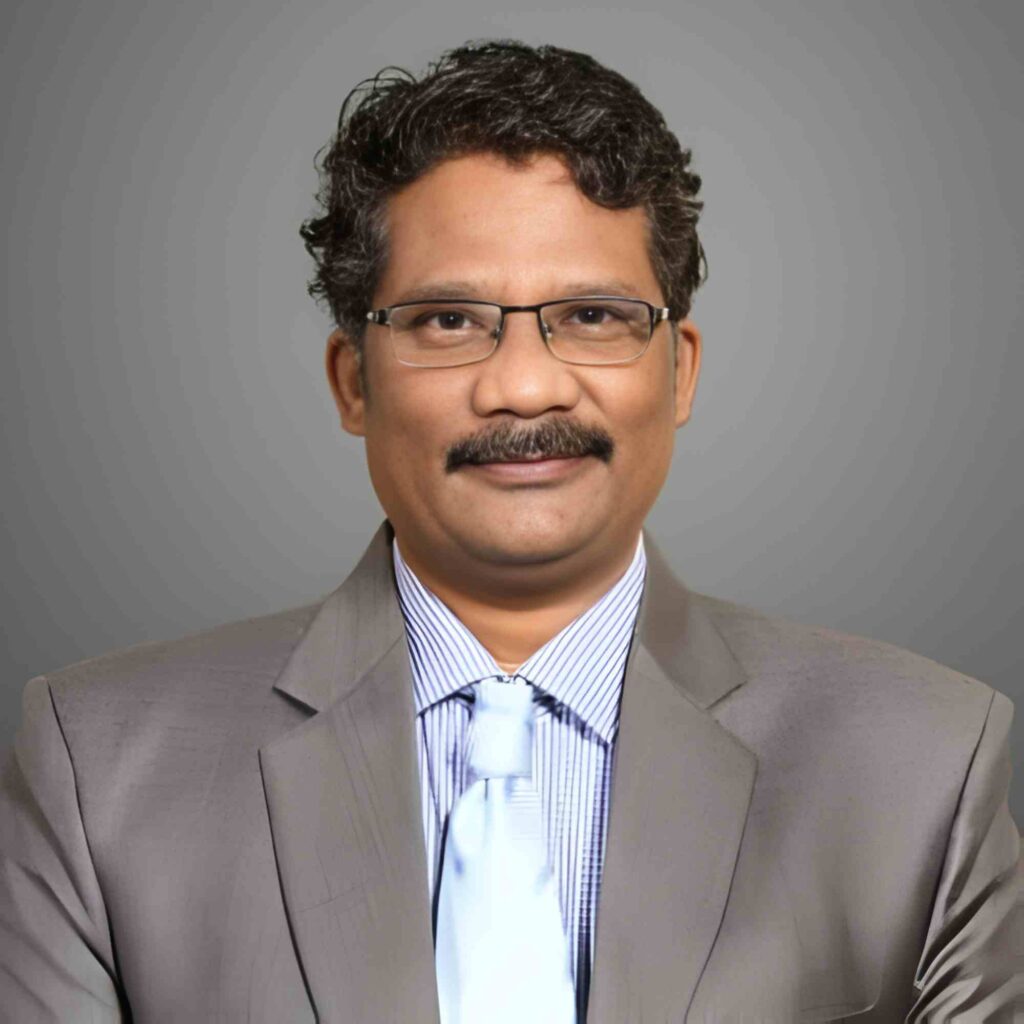
India’s healthcare system is witnessing a significant shift-not only in how surgeries are performed, but also in how surgical expertise is transferred, scaled, and institutionalized. As minimally invasive and laparoscopic procedures become the standard of care, the demand for skilled surgeons trained beyond conventional medical education frameworks has grown sharply. At the center of this transition are practitioners who are not just clinicians, but educators and system builders.
One such name that has been drawing attention within medical and academic circles is Dr. Varun Raju Thirumalagiri, a General and Laparoscopic Surgeon based in Telangana. The India Prime Times editorial team recently met Dr. Varun and interacted with several surgeons trained under his programs, offering insight into how surgical education models in India are evolving-and why this matters for patient outcomes nationwide.
A broader trend in Indian surgery
Globally, laparoscopic and minimally invasive surgery began gaining momentum in the late 1980s and early 1990s, reshaping surgical outcomes through reduced recovery time, lower complication rates, and shorter hospital stays. India followed this trajectory, but unevenly. While metro-based corporate hospitals adopted new technologies early, access to structured training remained limited for many practicing surgeons, particularly outside Tier-1 cities.
Healthcare experts note that this gap between technology adoption and practitioner readiness posed risks-not only for patient safety but also for equitable healthcare delivery. It is within this context that clinician-led training initiatives have emerged as a critical bridge.
A career shaped by adaptation, not privilege
Dr. Varun Raju’s professional journey mirrors this broader evolution. Raised in Miryalaguda, Telangana, as the eighth child in a teacher’s family, his early education was in Telugu medium schools-a background still common for many aspiring doctors from semi-urban India. His initial attempt to secure an MBBS seat was unsuccessful, but persistence paid off when he entered Kurnool Medical College in 1988, completing his MBBS in 1994.
Colleagues and former trainees told India Prime Times that this early experience shaped his long-standing emphasis on resilience and continuous learning-qualities increasingly essential in modern medicine. Following postgraduate surgical training, he progressed through registrar and consultant roles, eventually focusing on laparoscopic surgery during a period when the specialty was still gaining acceptance in India.
Aligning with technological inflection points
By the late 1990s and early 2000s, laparoscopic procedures were no longer niche innovations but emerging standards. Dr. Varun was among the surgeons who aligned their practice with this inflection point, establishing laparoscopic departments and later transitioning into corporate hospital environments where case volumes and exposure to advanced equipment expanded significantly.
However, what sets his trajectory apart is not only clinical adoption, but educational foresight. According to medical educators, many experienced surgeons excel clinically but struggle to translate expertise into scalable teaching models. Dr. Varun took a different route.
Since 2021, he has been running a four-month intensive laparoscopic fellowship that has reportedly trained over 2,500 surgeons-a scale rarely seen in hands-on surgical education. During our interaction, India Prime Times observed that the program focuses on repeatable protocols, live-case simulations, and outcome tracking rather than purely observational learning.
Rethinking how surgeons are trained
Medical education specialists point out that traditional long-duration fellowships, while thorough, often limit reach. Dr. Varun’s model reflects a growing trend toward concentrated, outcome-driven training, where experienced practitioners upskill without stepping away from practice for years.
Several surgeons who completed the fellowship told India Prime Times that the program’s structure-intensive, case-oriented, and mentored-helped reduce their learning curve significantly. This approach aligns with broader healthcare system needs, where faster onboarding of competent surgeons can directly impact surgical access in smaller cities and districts.
Beyond training, Dr. Varun has authored multiple surgical books and presented research at national and international forums. Experts note that this combination of practice, publication, and pedagogy creates a feedback loop that strengthens both individual skill and institutional credibility.
Institutional thinking in a clinical profession
Healthcare leadership analysts increasingly argue that modern medicine requires institutional thinking-not just individual excellence. In this context, Dr. Varun’s work illustrates how one clinician can influence systems far beyond their operating room.
The India Prime Times team noted that his training framework emphasizes measurable impact: surgical outcomes, complication rates, and post-training adoption of techniques. Such metrics are often discussed in corporate healthcare management but less systematically applied in independent clinical education initiatives.
Interestingly, peers also highlight his engagement with Indian classical music and research outside routine clinical practice. While seemingly unrelated, educators suggest such interdisciplinary pursuits can enhance focus, resilience, and creative problem-solving-traits vital for surgeons operating under high pressure.
Why this matters beyond medicine
From a leadership perspective, Dr. Varun’s model offers lessons applicable beyond healthcare. In industries where skill, precision, and safety are non-negotiable, scalable education systems become strategic assets. Training 2,500 surgeons in a short span is not just an academic achievement-it has downstream effects on patient safety, healthcare costs, and system efficiency.
Executives and hospital administrators increasingly recognize that reducing the time it takes for surgeons to achieve proficiency can improve throughput and outcomes-metrics that resonate at both policy and operational levels.
During our conversation, Dr. Varun summarized this philosophy succinctly: “Mastery is built by deliberate practice and shared generously-teach more, and you multiply impact.”
A model for the next phase of Indian healthcare
As India continues to expand its healthcare infrastructure, the challenge will not only be building hospitals, but ensuring a steady pipeline of skilled professionals who can deliver advanced care safely. Clinician-educators like Dr. Varun Raju Thirumalagiri represent a growing category of leaders addressing this challenge from within the system.
The India Prime Times editorial team observed that his journey-from a small-town medical aspirant to a surgeon shaping national training capacity-reflects a larger narrative unfolding across Indian healthcare: one where excellence is no longer confined to elite institutions, but increasingly driven by scalable, practitioner-led initiatives.
In an era where access, quality, and speed must coexist, such models may well define the future of surgical education-and, by extension, patient care-in India.