Ancient Ritual Sciences Find Contemporary Relevance as Traditional Scholars Adapt to Modern India
4 min read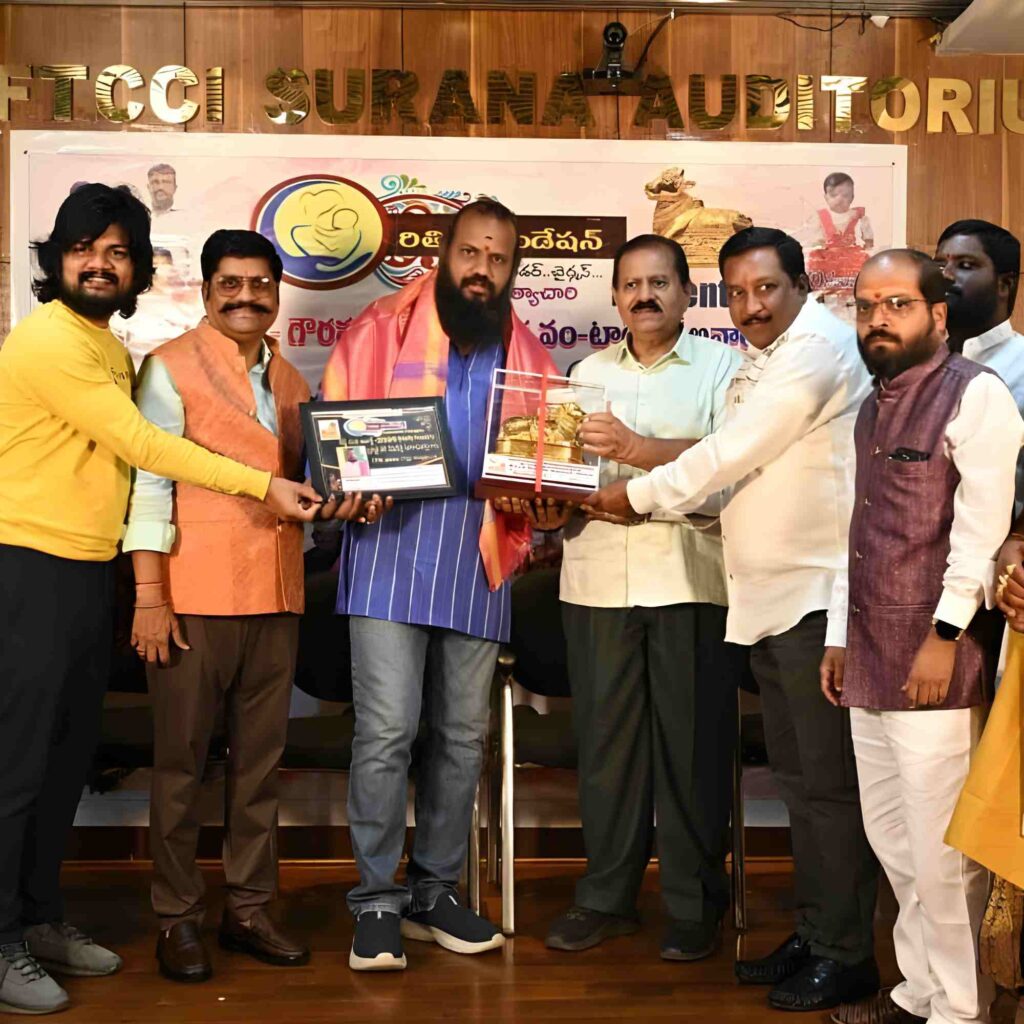
In an era increasingly defined by artificial intelligence, automation, and digital convenience, India continues to witness a parallel resurgence of interest in its traditional knowledge systems. From wellness practices to temple sciences, ancient disciplines are being revisited not as relics of the past, but as living frameworks that still influence social, cultural, and spiritual life. One such area is Agama Sastra, the classical system governing temple construction, rituals, and modes of worship-an essential yet often overlooked pillar of India’s spiritual infrastructure.
At the heart of this quiet continuity is Telidevarapalli Seetha Rama Sastry, an astrologer and Agama Sastra Pandit based in Hyderabad. While not positioned as a public figure in the conventional sense, his work reflects a broader trend: the sustained demand for trained, authentic ritual experts who can bridge centuries-old traditions with the expectations of present-day society.
The India Prime Times editorial team recently met Sastry to understand how traditional spiritual practitioners are navigating relevance, responsibility, and credibility in a rapidly modernising India. The interaction offered insights into how ritual sciences remain embedded in everyday life, even as society evolves technologically.
Tradition as a Structured Discipline, Not Symbolism
Contrary to popular perception, Agama Sastra is not an abstract or symbolic practice. It is a codified system with detailed prescriptions on temple architecture, deity installation (Pratishtha), rituals, timings, and ceremonial conduct. In India, where temple worship remains central to community life, the accuracy of these practices holds both spiritual and cultural significance.
Sastry began his formal training at the age of 14, following a disciplined path within the Smartha tradition. Over the past 25 years, he has been involved in more than 100 temple Pratishthas and has conducted over 1,000 ceremonies including marriages and Gruhapraveshams. While these numbers indicate scale, industry observers note that what matters more is continuity-ensuring rituals are conducted according to textual authority rather than improvisation.
During our interaction, Sastry emphasised that ritual errors are not merely technical mistakes but are seen by devotees as disruptions to spiritual harmony. “People may modernise their homes and lifestyles, but when it comes to rituals, they still seek authenticity,” he said.
Spiritual Services in a Changing Social Context
India’s ritual economy-covering temples, ceremonies, and religious observances-continues to employ thousands of traditional scholars, priests, and artisans. According to cultural researchers, nearly 70–80% of Indian households participate in some form of ritual practice annually. This creates a sustained need for trained practitioners who understand not just astrology or worship, but also the philosophical and procedural foundations behind them.
Sastry’s expertise spans Chandi Yagams, Devatha Homas, Navagraha rituals, Pitru and Sarpa Dosha Nivaranas, and other specialised ceremonies. While such practices are deeply traditional, they now operate within a modern social framework-urban schedules, nuclear families, legal formalities, and heightened public scrutiny.
The India Prime Times team observed that this shift has required practitioners like Sastry to balance textual precision with clear communication. “People today ask why a ritual is done, not just how,” he explained. This reflects a growing demand for transparency and understanding, even in spiritual matters.
Leadership Beyond the Ritual Space
Another evolving dimension of traditional scholarship is community leadership. Sastry currently serves as President of the Telangana State Archaka Seva Sangam (TPASS) and has previously held leadership roles in community organisations such as the Brahmana Seva Samithi. These roles are increasingly important as temple priests and ritual experts face challenges related to regulation, livelihood security, and social recognition.
During the COVID-19 pandemic, Sastry was involved in voluntary seva activities, supporting communities during a period when temples were closed and traditional incomes disrupted. Such efforts highlight how spiritual leadership often extends beyond ritual spaces into social responsibility.
Additionally, for the past seven years, Sastry has been managing a goshala with 15 cows, contributing to indigenous cattle preservation. He also conducts Annadanam every 15 days, continuing the age-old tradition of food donation as a form of social service. Cultural historians note that such practices reinforce the role of temples and spiritual institutions as centres of community welfare, not just worship.
Sustaining Tradition Without Institutional Backing
One of the notable aspects of Sastry’s journey, as observed by the India Prime Times team, is that his work was built without significant institutional or financial backing in the early years. Unlike hereditary temple positions or state-supported roles, his recognition emerged gradually through consistent practice and word-of-mouth credibility.
This reflects a broader reality within India’s traditional knowledge sectors, where many practitioners operate independently, relying on reputation and community trust rather than formal platforms. Experts argue that while this model preserves authenticity, it also exposes practitioners to economic uncertainty-raising questions about how India supports its cultural custodians.
Astrology and Agama in Modern Discourse
Astrology and ritual sciences often attract scepticism in modern discourse, particularly among younger, urban populations. However, sociologists point out that demand persists because these systems address emotional, cultural, and existential needs that technology cannot replace.
Sastry acknowledged this tension during our conversation. He noted that his role is not to oppose modernity, but to contextualise tradition responsibly. “Spiritual service is not about fear or prediction; it is about alignment-within the individual, the family, and the community,” he said.
A Broader Cultural Implication
The continued relevance of figures like Telidevarapalli Seetha Rama Sastry highlights a critical cultural question: how does India modernise without erasing its civilisational memory? As temples undergo renovations, urban families seek rituals adapted to contemporary life, and younger generations question inherited practices, the role of trained Agama experts becomes even more significant.
From our interaction, it became clear that traditional scholars today are not merely ritual performers. They are educators, custodians, and mediators between ancient texts and modern lives.
For readers of India Prime Times, this is not a story of individual achievement, but of an industry and tradition adapting quietly yet steadily. In a country where progress and heritage coexist daily, such journeys remind us that innovation and preservation are not opposing forces-but complementary responsibilities shaping India’s cultural future.