Defunct NASA Satellite Van Allen Probe A Re-Enters Earth’s Atmosphere After 14 Years in Space
3 min read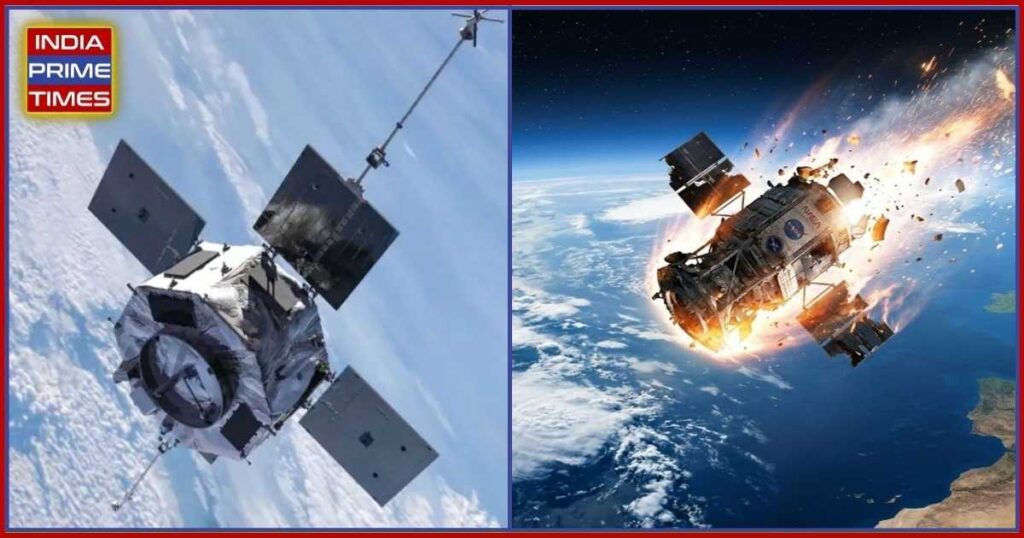
A retired scientific satellite launched by NASA has returned to Earth after more than a decade in orbit. The spacecraft, known as Van Allen Probe A, re-entered Earth’s atmosphere in March 2026, marking the final phase of a historic mission that helped scientists better understand the planet’s radiation environment.
The satellite, which weighed about 1,323 pounds (around 600 kilograms), had been orbiting Earth since August 2012. After completing its scientific mission several years ago, the spacecraft gradually lost altitude due to atmospheric drag before eventually falling back toward the planet in an uncontrolled re-entry.
What Happened During the Satellite’s Re-Entry
According to tracking data from the United States Space Force, the spacecraft re-entered the atmosphere over the eastern Pacific Ocean. Scientists had predicted the descent with a margin of error of several hours, which is common for such events.
As the satellite plunged through the atmosphere at extremely high speeds, intense friction generated enormous heat. Most of the spacecraft burned up before reaching the surface, creating a bright fiery streak across the sky.
Experts say that while a few small fragments made of stronger materials could survive the re-entry, the majority of the satellite was destroyed during its descent.
Is There Any Danger to People on Earth?
Scientists have repeatedly emphasised that the risk to the public from falling satellite debris is extremely low.
NASA estimated the probability of debris causing harm to a person at roughly 1 in 4,200 – a very small chance. Several factors reduce the risk significantly:
- 71% of Earth’s surface is covered by oceans, meaning debris is far more likely to land in water.
- Many spacecraft components burn completely during atmospheric entry.
- Surviving fragments typically fall in remote or uninhabited regions.
For these reasons, space agencies consider such re-entry events largely safe for the general public.
Why Scientists Cannot Precisely Predict Satellite Re-Entry
Predicting the exact time and location of a satellite’s re-entry remains challenging. Multiple variables influence how quickly an object falls back to Earth, including:
- Changes in atmospheric density
- Solar activity and space weather conditions
- The satellite’s orbit and structural condition
In the case of Van Allen Probe A, increased solar activity in recent years expanded Earth’s upper atmosphere, creating stronger drag that pulled the satellite down faster than scientists originally expected.
When the mission ended in 2019, experts had predicted the spacecraft would remain in orbit until around 2034, but atmospheric drag accelerated its return.
The Mission That Changed Our Understanding of Space Radiation
The Van Allen Probe A satellite was launched as part of the Van Allen Probes Mission, which included two identical spacecraft: Probe A and Probe B.
The mission was designed to study the Van Allen Radiation Belts, regions of highly energetic charged particles trapped by Earth’s magnetic field.
These radiation belts form massive doughnut-shaped zones around the planet and play a critical role in protecting Earth from harmful solar radiation.
The probes spent seven years collecting detailed data on how these radiation belts behave, helping scientists understand:
- How charged particles enter and exit the belts
- How solar storms affect Earth’s magnetic environment
- How radiation impacts satellites and astronauts in space
One of the mission’s most significant discoveries was the temporary formation of a third radiation belt during intense solar storms, something scientists had never observed before.
A Common but Important Space Event
While a satellite falling back to Earth may sound dramatic, experts say such re-entries happen frequently.
Thousands of pieces of space debris, including old satellites and rocket stages, orbit the planet. Over time, many eventually fall back to Earth as their orbits decay.
Most burn up completely in the atmosphere before reaching the ground, making these events a routine part of space operations.
What Happens Next?
Although Probe A has completed its journey, its twin satellite Van Allen Probe B still remains in orbit, though it is no longer operational. Scientists estimate it may re-enter Earth’s atmosphere sometime after 2030.
For space researchers, the end of Probe A represents the closing chapter of a mission that provided unprecedented insights into Earth’s radiation environment – knowledge that continues to improve the safety of satellites, astronauts, and future space missions.
For updates, queries, or to publish an article with India Prime Times, please contact us:
📞 Phone: +91 9490056002
📧 Email: info@indiaprimetimes.com
💬 WhatsApp: https://wa.me/919490056002