
From Responsive AI to Responsible AI: Redefining the Global Tech Landscape
4 min read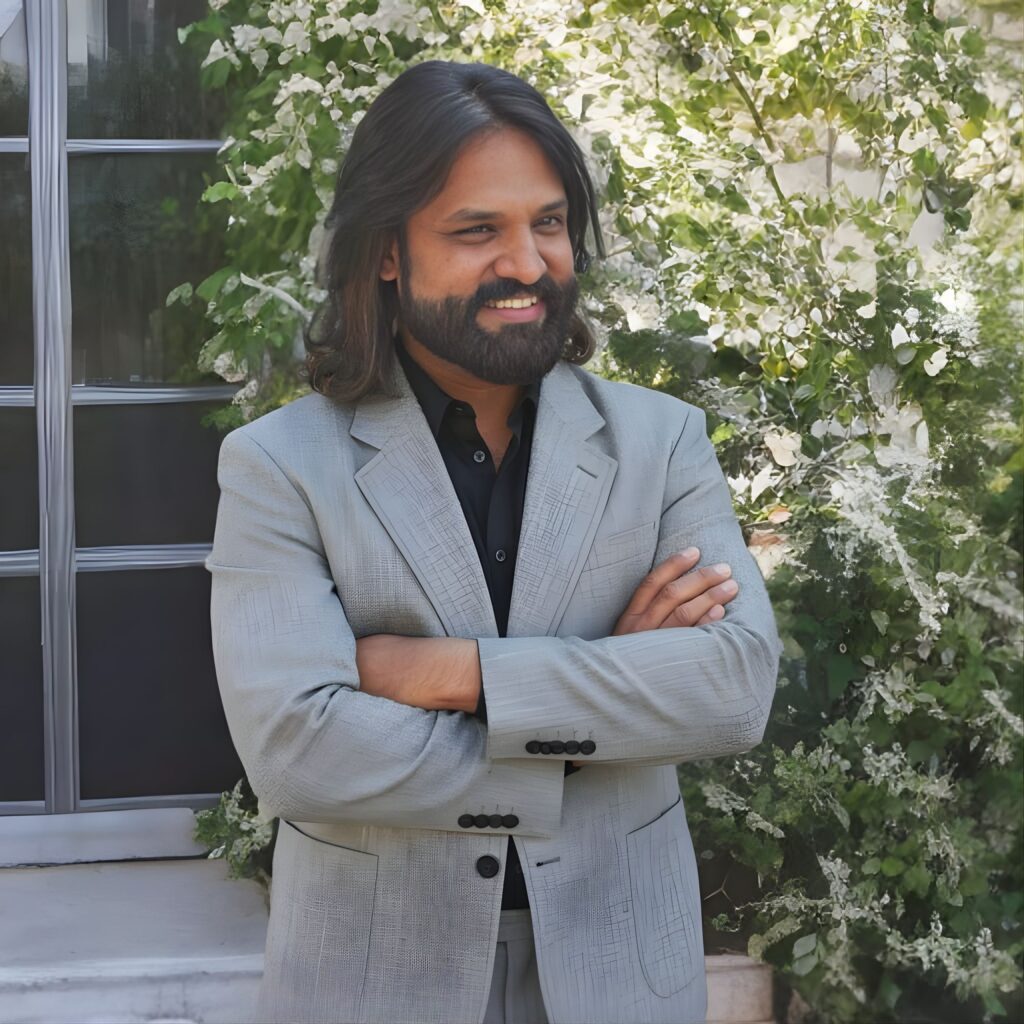
The global narrative surrounding Artificial Intelligence (AI) has reached a defining moment. As the world moves beyond the initial “gold rush” of generative models and automated efficiency, a more fundamental question has emerged: how do we ensure that increasingly responsive machines remain accountable to the humans they serve? From the technology corridors of Bengaluru to Palo Alto, the discussion is no longer limited to what AI can do, but what it shouldbe responsible for.
Responsible AI-once viewed as an academic or regulatory concern-has now moved to the center of industrial relevance. As enterprises across FMCG, healthcare, education, and finance embed AI deeply into decision-making processes, trust, emotional impact, and long-term societal consequences are becoming decisive business variables. Human-centric technology is no longer a philosophical preference; it is fast becoming a competitive requirement.
The New Benchmark: Responsibility as Architecture, Not a Feature
For decades, technology innovation followed the philosophy of speed-move fast and break things. But AI, by its very nature, operates closer to human judgment, emotion, and belief. This proximity demands a different approach. Industry leaders are increasingly advocating for what many now call “architecture with responsibility”-systems designed with intent, empathy, and measurable human outcomes.
In a recent deep-dive discussion hosted by India Prime Times with senior industry voices, one theme emerged consistently: the next decade of global technology leadership will be defined by how effectively AI systems understand emotion, credibility, and consequence. The convergence between Silicon Valley and India’s Silicon Plateau will hinge not on model size, but on human awareness built into machines.
A Purpose-Driven Perspective: Ritesh Kumar on Responsible AI
To better understand this shift, the India Prime Times editorial team engaged with Ritesh Kumar, CEO of ValueOn Talks Inc, a leader working at the intersection of AI, emotion, trust, and decision-making.
Across his work, one principle remains constant. As Ritesh Kumar puts it,
“We don’t build AI products to impress systems. We build them to empower humans, not overpower them.”
Rather than framing responsibility as governance or restriction, Ritesh Kumar approaches it as a design philosophy. In conversations with our team, he emphasized that AI systems influencing emotions, beliefs, or livelihoods cannot afford neutrality. They must be intentional, accountable, and aligned with human values from the ground up.
Innovative Applications: Responsible AI in Action
When probed further on how this philosophy translates into real systems, Ritesh Kumar introduced a set of initiatives that reflect how Responsible AI can be applied to deeply human challenges. These initiatives, developed under ValueOn Talks, focus on areas where technology’s influence is most sensitive-and most consequential.
Chill Pill addresses one such area: teenage mental health. Designed for adolescents navigating digital fatigue, emotional stress, and behavioral overload, the platform helps users recognize emotional and behavioral patterns in real time. Instead of diagnosing or labeling, Chill Pill functions as reflective AI-supporting emotional awareness for a vulnerable demographic without judgment.
Truth Sense tackles another modern crisis: the erosion of trust in the digital world. In an era of deepfakes, synthetic content, and manufactured narratives, Truth Sense evaluates credibility and authenticity signals for individuals and brands. Its goal is not control, but clarity-introducing accountability into digital identity where trust can no longer be assumed.
As Ritesh Kumar explains, “If AI can influence what people feel or believe, then responsibility is not optional-it is foundational.”
Gurudev: AI as a Spiritual Life Coach
One of the most distinctive initiatives under Ritesh Kumar’s leadership is Gurudev, a spiritual AI life coach designed to guide individuals through decisions ranging from everyday choices to life-changing crossroads.
Powered by the Bhagavad Gita, Gurudev blends timeless wisdom with contextual intelligence to help users reflect, realign, and act with clarity. Unlike conventional AI assistants optimized for speed or productivity, Gurudev focuses on values, intent, and inner alignment.
It does not replace human judgment. It strengthens it-positioning AI not as an authority, but as a guide grounded in spiritual insight and self-reflection.
Jack Force and the Responsible Future of Work
Responsible AI must also address livelihoods. Jack Force reimagines AI in the workplace through transparent, role-defined AI agents that augment human teams rather than replace them.
As organizations transition from rigid outsourcing models to agile staff augmentation, Jack Force enables enterprises to deploy AI responsibly-ensuring clarity, accountability, and collaboration. Automation becomes visible and supportive, not invisible and disruptive.
This shift reflects a broader move away from transactional efficiency toward experience-driven, trust-based systems.
Why Responsible AI Is Now a CEO Mandate
As AI becomes embedded in core business strategy, responsibility can no longer be delegated solely to technical teams. It sits squarely with leadership.
AI systems influence customer trust, employee confidence, brand reputation, and long-term societal impact. CEOs who treat Responsible AI as an afterthought risk building speed without stability-and innovation without trust.
The next generation of leadership will be defined not by who builds the most responsive machines, but by who takes responsibility for their consequences.
As Ritesh Kumar says:
“AI may displace human labour, but it should never replace humans.”