
India men’s cricket team crushes Pakistan men’s cricket team by 61 runs in Colombo – Suryakumar’s tactical masterclass and Kishan’s 77 seal Super Eight spot
3 min read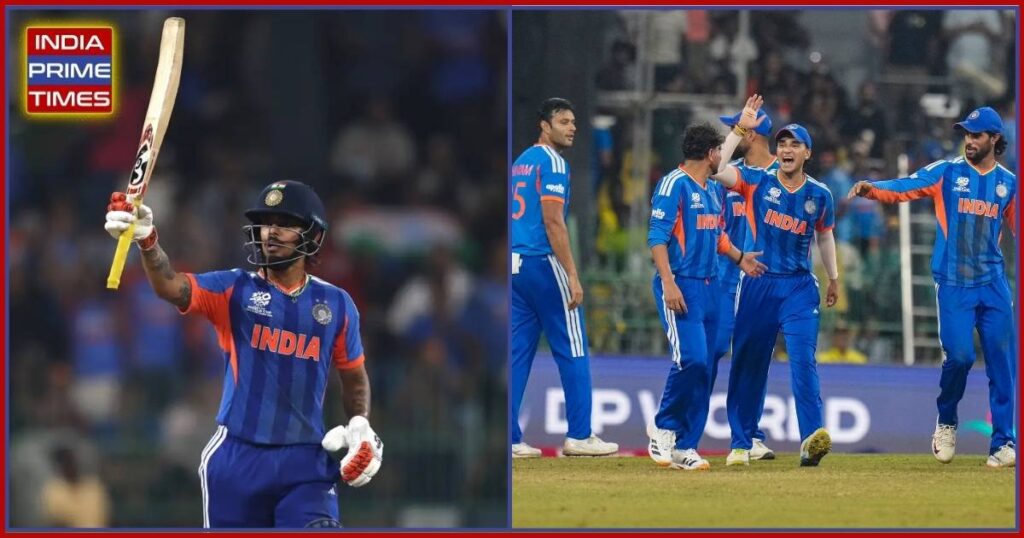
Match at a glance: India posted 175/7 and then bowled out Pakistan for 114 in 18 overs at the R. Premadasa Stadium to secure a 61-run victory and lock a place in the Super Eight stage of the ICC Men’s T20 World Cup 2026. The win extended India’s dominant T20 World Cup head-to-head over Pakistan and left the visitors needing a must-win in their final group game.
Key figures (entities)
Suryakumar Yadav – India captain, architect of the win (bowling rotation, calm leadership)
Ishan Kishan – Player of the match, 77 off 40 that decided the contest
Salman Ali Agha – Pakistan skipper, urged perspective after a heavy loss
Why the result matters – background in brief
This fixture carried an unusually high political and emotional charge after earlier boycott threats and diplomatic tensions surrounding the tournament. Tournament organisers and boards worked to keep the match on the field; once it began, the contest was meant to be decided by cricket. Instead, India produced a professional, comprehensive performance – strong powerplay hitting, incisive pace upfront and varied spin in the middle – while Pakistan’s plans failed to translate into execution.
Match narrative – the turning points
1. Powerplay punch that set the tone. The opener’s aggressive innings in the first phase put India on the front foot. Those early runs meant India were always on the front foot when they reached the middle overs.
2. Early breakthroughs with the new ball. When Pakistan batted, India’s quicks struck early to leave the visitors reeling. Two early wickets inside the powerplay made the chase a steep uphill task.
3. Spin control and compression. India’s spin options tightened the chase’s breathing space. Accurate lines and willingness to bowl attacking options forced errors – Pakistan never rebuilt partnerships of size.
4. Tactical captaincy. The Indian leader’s bowling changes and decision to back part-timers later in the innings (given the game state) were pragmatic – an example of managing resources and giving fringe players exposure in a low-risk phase.
Standout performances
- Ishan Kishan (Player of the Match): A high-impact 77 that attacked Pakistan’s spin early and decisively tilted momentum toward India. The knock combined power, improvisation and situational awareness – especially valuable on a wicket offering grip and variable bounce.
- India’s new-ball attack: The quicks used seam and cutter to extract early movement; dismissals up front tilted the chase beyond Pakistan’s recovery range.
- Pakistan’s spin battery: On paper a rich variety (carrom balls, off-spin, mystery deliveries), but the plan lacked execution; a few bowlers had poor days and leaked runs at crucial moments.
Tactical analysis – what worked, what didn’t
India – balance and adaptability. The batting plan mixed aggression up front with consolidation in the middle. Bowling displayed variety: seamers to strike early, spinners to choke the chase. Captaincy emphasized control – rotating the attack, bringing on matchups and keeping intensity high.
Pakistan – intentions were correct, execution was not. The visitors entrusted most overs to spin, trusting it would dominate on a tacky surface. However, several factors undermined that plan: wayward lengths from key bowlers, insufficient hitting against India’s spin, and a failure to build partnerships while chasing. The decision to rely heavily on spin backfired because the bowlers didn’t hit the right areas consistently.
Quotable takeaway from the captains
- The India captain dedicated the win to the nation and lauded the opener’s responsibility in the powerplay.
- Pakistan’s captain urged calm and perspective, reminding stakeholders that the team must reset quickly with a must-win remaining to reach the Super Eight.
What’s next
- India advance to the Super Eight and will regroup for their next fixture with confidence – the combination of flexible bowling and explosive batting is a clear strength.
- Pakistan must beat Namibia in their final group match to keep qualification hopes alive; otherwise a storied campaign will end earlier than expected.
Bottom line
This was not the blockbuster, edge-of-seat thriller many had expected – but it was a clinical display from a title-defending side and a telling example of how plans without execution come undone. The arch-rivalry’s headlines will now pivot from pre-match drama to Pakistan’s urgent need for response and India’s bid to carry momentum into the Super Eight.
For updates, queries or to publish an article with India Prime Times, contact us:
Phone: +91 9490056002
Email: info@indiaprimetimes.com
WhatsApp: https://wa.me/919490056002