
Global Health Emergency Declared as Rare, Vaccine-Resistant Ebola Strain Kills 131 in DR Congo
3 min read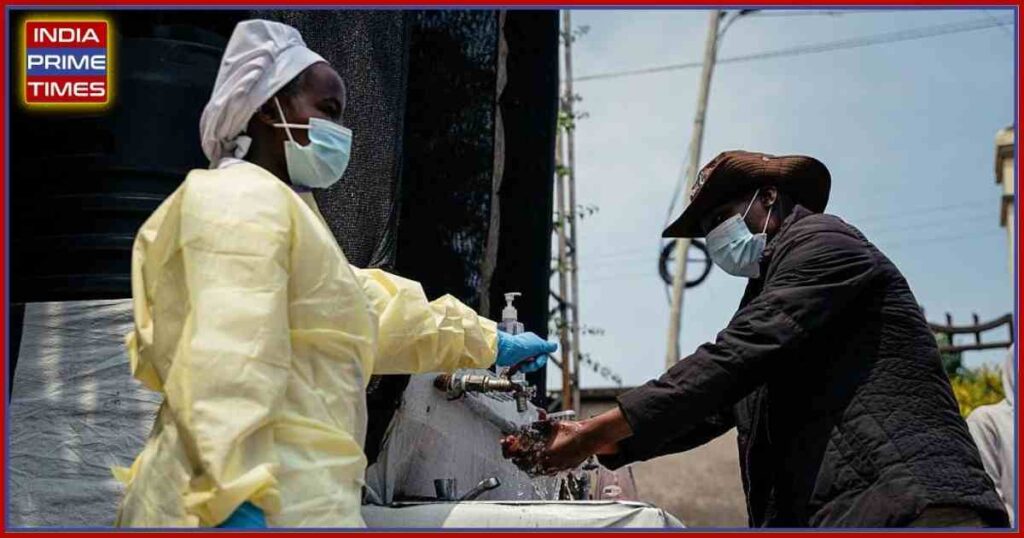
The World Health Organization (WHO) has officially declared the rapidly escalating Ebola outbreak in the Democratic Republic of Congo (DRC) a Public Health Emergency of International Concern. The crisis, driven by the rare Bundibugyo variant, has already claimed an estimated 131 lives out of more than 513 suspected cases, triggering widespread panic and an urgent global response.
The Threat: No Approved Vaccine
Unlike the more common Zaire strain of the Ebola virus, which has an approved vaccine, there are currently no approved therapeutics or vaccines for the Bundibugyo variant. This specific strain has a staggering mortality rate ranging from 30% to 50%.
To combat this, the WHO has rapidly convened a technical emergency committee to explore the use of experimental medicines and evaluate whether vaccines currently in development could offer any baseline protection for frontline workers and exposed communities.
The Epicentre and Cross-Border Spread
The outbreak is heavily concentrated in the northeastern Ituri province of the DRC, specifically in areas like Mongbwalu, Rwampara, Nyakunde, and Bunia.
However, authorities are deeply concerned by the speed at which the virus is moving geographically:
- Goma: Cases have been confirmed in North Kivu’s rebel-held capital, a densely populated city of roughly 850,000 people.
- Uganda: The virus has already crossed international borders, with two confirmed cases-and one fatality-reported in the Ugandan capital, Kampala, linked to travellers from the DRC.
“The more we are investigating this outbreak, the more we realise that it has already disseminated… across borders and also in other provinces,” stated Dr. Anne Ancia, the WHO’s representative for the DRC.
A System Overwhelmed: Why Containment is Failing
Several compounding factors are making this outbreak exceptionally difficult to control on the ground:
- Armed Conflict and Displacement: The Ituri and North Kivu provinces have been ravaged by armed conflict. Recent fighting has displaced over 100,000 civilians, creating a highly mobile population that inadvertently accelerates the spread of the virus.
- Broken Health Infrastructure: The region is already reeling from concurrent crises, including a severe cholera outbreak. Basic protective equipment, such as gloves, masks, and goggles, is in critically short supply for frontline health workers.
- Severe Under-Detection: Epidemiological models from the London-based MRC Centre for Global Infectious Disease Analysis suggest the true magnitude of the outbreak is likely much larger than currently reported, warning that there may have already been more than 1,000 cases.
International Response and Evacuations
The WHO has dispatched over 18 tonnes of critical health supplies, including personal protective equipment (PPE) and diagnostic materials, from logistics hubs in Kinshasa and Nairobi to the affected zones.
Meanwhile, international governments are taking immediate precautions. An American citizen, reportedly a medical worker exposed to the virus in the DRC, tested positive and has been evacuated to Germany for highly specialized treatment. The US Centers for Disease Control and Prevention (CDC) is also working to monitor and evacuate at least six other Americans who were exposed.
Regionally, Bahrain has suspended entry for travellers arriving from the DRC, Uganda, and South Sudan, while neighbouring Rwanda has sealed its border with the DRC to prevent further spillover.
Get in Touch with India Prime Times
For any updates, queries, or to publish a news article, please reach out to our editorial desk:
- Contact Number: +91 9490056002
- Email ID: info@indiaprimetimes.com
- WhatsApp Us: https://wa.me/919490056002