
From Screwdrivers to Espresso Machines: Why This US National Thinks Blinkit is ‘God’
3 min read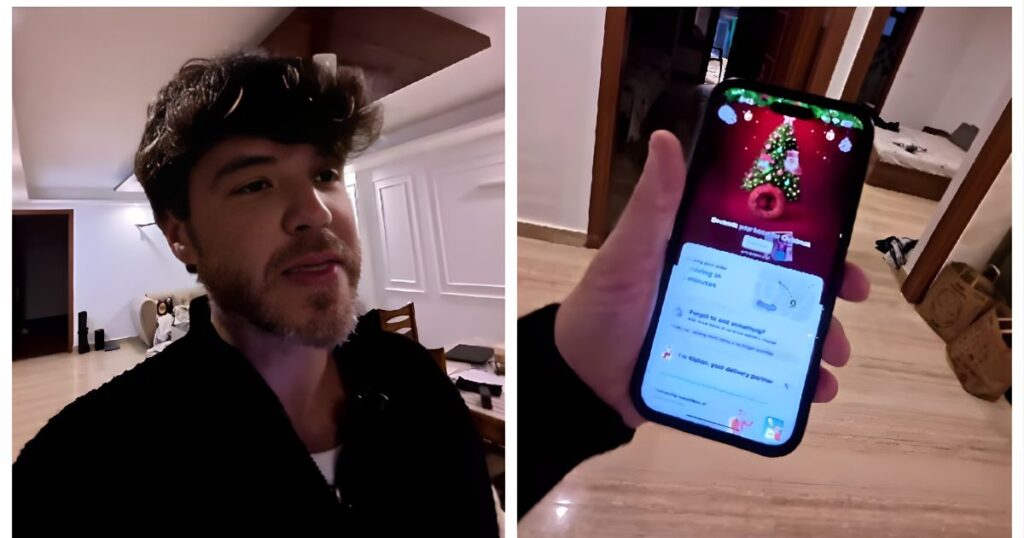
NEW DELHI – In a city known for its frantic pace and notorious traffic, the efficiency of India’s quick-commerce sector has long been a local marvel. However, it is now catching the eyes-and staggering the minds-of the international community.
Charlie Evans, a US national currently residing in the capital, has gone viral after documenting a delivery experience that he claims would be virtually impossible in the United States. His verdict on the Indian platform Blinkit? “Blinkit is god.”
The Six-Minute Challenge
The buzz began when Evans posted an Instagram Reel intended to show his friends back in the States just how radical India’s “last-mile” logistics have become.
At 5:43 PM, Evans placed an eclectic order: a heavy mineral water can and a screwdriver. While most global delivery services measure wait times in hours or days, Evans tracked his delivery agent in real-time, expressing a mix of disbelief and fascination.
By 5:49 PM-a mere six minutes later-the doorbell rang.
“I’m showing my USA friends how quick this app and service is,” Evans said in the video. “They get here super quick, and I have no idea how they find the building.”
Beyond Groceries: A One-Stop Ecosystem
For many international observers, the shock isn’t just the speed, but the inventory. Evans highlighted that Blinkit has evolved far beyond a simple grocery runner. He noted that the platform now functions as a “one-stop shop” for almost any household need, including:
- Daily Essentials: Fresh produce and water.
- Hardware: Tools like the screwdriver he ordered.
- High-Value Electronics: Items as significant as washing machines and espresso makers.
- Lifestyle: Clothing and fashion accessories.
Background: The Rise of India’s ‘Dark Stores’
To understand why Evans was so stunned, one must look at the infrastructure behind the app. India is currently the global leader in the Quick Commerce (Q-Commerce) model.
Unlike traditional e-commerce, which relies on massive regional warehouses, platforms like Blinkit, Zepto, and Swiggy Instamart utilize “Dark Stores.” These are small, highly localized distribution centers tucked away in neighborhood corners. By keeping inventory within a 2–3 kilometer radius of the consumer, these companies have effectively bypassed the “logistics nightmare” of urban traffic.
The Breakdown: Why This Matters
The viral reaction to Evans’ video underscores a significant shift in global consumer expectations:
- The Navigation Paradox: Evans noted that the only thing that usually slows a delivery is the complexity of New Delhi’s addresses, yet the “delivery partners” manage to navigate the maze with pinpoint accuracy.
- Global Comparison: In the US, services like Amazon Prime or Instacart are considered “fast” if they arrive within two hours or the same day. The “under-10-minute” model seen in India remains a logistical feat that Western markets have yet to replicate successfully at this scale.
- Consumer Behavior: The ability to get a screwdriver in six minutes changes how people live, removing the need for “emergency” hardware store runs or keeping large inventories of household goods.
The Viral Verdict
Evans’ documentation has sparked a wider conversation about the dignity and pressure of the gig economy, but for the millions of users in India, it is a daily reality. As Evans concluded his video, he stood in his New Delhi home with his water and tools, still visibly shocked by the efficiency of a system that has turned “waiting” into a thing of the past.