Viral brawl on Varanasi-Lucknow Intercity near Amethi raises fresh safety concerns; GRP opens probe
3 min read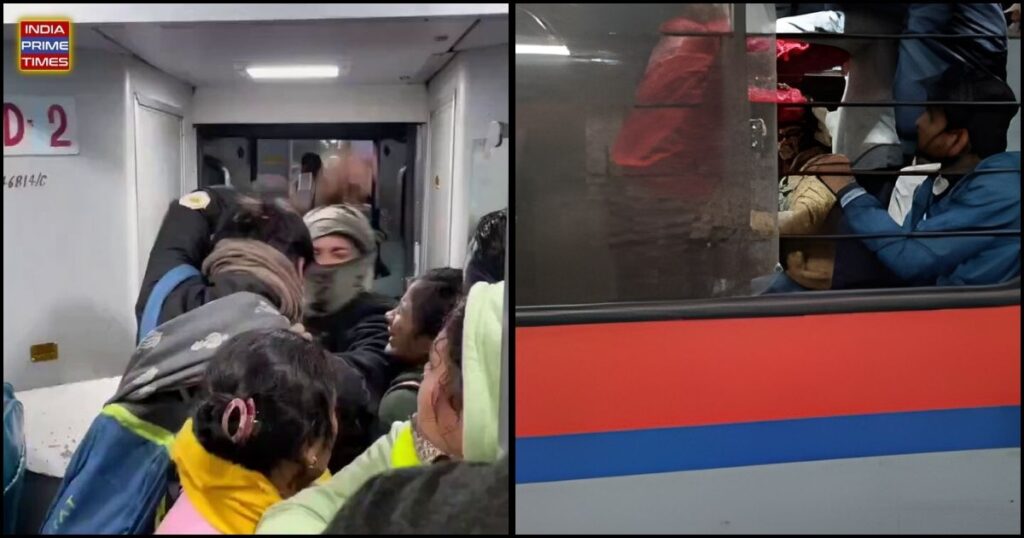
A short, 19-second video that surfaced on social media on Wednesday shows passengers trading blows inside the Varanasi-Lucknow Intercity Express as the coach stood near Amethi -an episode that has reignited debates over crowd management and passenger safety on Indian trains. The footage, widely shared across X, Instagram and video platforms, captures punches, kicks and the frantic cries of bystanders -including a woman heard asking, “hum logo ko kaahe maar rahe ho?” (“Why are you hitting us?”).
What happened -the sequence
According to media reports that tracked the viral clip, the clash erupted while the train was stationed at Amethi railway station; one account places the disturbance at about 8:30 am. Eyewitness video shows the confrontation beginning as a verbal dispute -reportedly over boarding and seat availability -and quickly turning physical as a small group of men engaged in a fistfight inside the coach while other travellers either attempted to intervene or sought safety.
The footage and its spread
The short clip -repeatedly posted and reshared on social platforms and uploaded as a YouTube Shorts -is the primary source that drew attention to the incident. The rawness of the recording, with passengers filmed in close quarters and no immediate law-enforcement visible, has driven much of the public reaction. Media outlets used the same clip to reconstruct the timeline and identify the coach and location.
Official response
Railway police officials told reporters they became aware of the episode after the video was posted online. Farid Khan, in-charge of the Government Railway Police (GRP) outpost at Amethi, said the GRP in nearby Pratapgarh is examining the footage to identify those involved and that action will follow on the basis of a written complaint. The RailwaySeva account also said the matter was being escalated to the concerned official for necessary action.
Why this matters -context and safety implications
The Varanasi-Lucknow Intercity Express (which runs via Pratapgarh and stops at Amethi) is a busy regional service that carries daily commuters and travellers between two major Uttar Pradesh cities. Incidents such as this -though short in duration -expose several recurring issues on crowded routes: disputes over seats or boarding, limited on-board supervision in unreserved coaches, and the speed at which a verbal disagreement can become violent in confined spaces. Railway authorities and commuter rights groups say such episodes undermine public confidence and call for stronger on-train policing and better platform crowd management.
Public reaction
Social media users were quick to condemn the violence and to question why the situation escalated unchecked while the train was at a station. Comments ranged from calls for stricter rail security to broader critiques of public civility; others pointed out the vulnerability of uninvolved travellers -especially elderly people, women and children -when fights break out in moving public transport. Several local posts speculated about the cause of the argument (seat, boarding priority or access to facilities), but those details remain unverified
What we still don’t know
Key facts remain unconfirmed in public reporting: the identities of the people involved, whether anyone sustained serious injuries, and the precise trigger for the altercation. Authorities say they are relying on the video to identify suspects; follow-up action and any formal FIRs will determine whether this was an isolated dispute or part of a recurring problem on that particular service.
Takeaway
The Amethi brawl is a stark, visual reminder that even brief moments of disorder can rapidly endanger large numbers of passengers in confined rail coaches. For travellers, the episode underscores the value of de-escalation and of reporting incidents to on-board or station staff immediately; for rail operators, it reinforces demands from the public for visible security and faster response mechanisms when violence erupts.