
De-Dollarisation and Tech Ties Take Centre Stage: India, Japan to Unveil Yen-Rupee Trade and AI Pacts During PM Takaichi’s Historic Delhi Visit
3 min read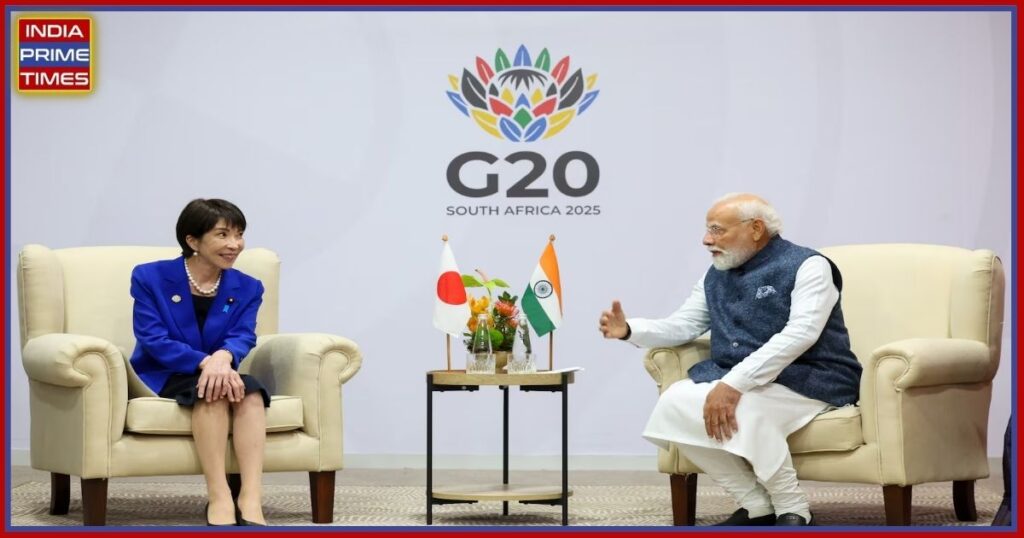
In a monumental step aimed at reshaping the economic and strategic landscape of Asia, Japanese Prime Minister Sanae Takaichi arrives in New Delhi on Wednesday evening (July 1, 2026) for her maiden official visit to India as Premier.
Marking the historic 20th India-Japan Annual Summit, PM Takaichi’s meeting with Prime Minister Narendra Modi is expected to set a robust blueprint for bilateral relations over the next decade. Against the backdrop of escalating conflicts in the Persian Gulf and shifting global supply chains, the two leaders are preparing to unveil a series of landmark agreements, ranging from a direct currency settlement framework to advanced cooperation in Artificial Intelligence (AI) and semiconductor manufacturing.
Here is a comprehensive breakdown of what to expect from this high-stakes diplomatic summit.
1. Bypassing the Dollar: The Yen-Rupee Settlement Plan
Perhaps the most globally significant economic development on the summit’s agenda is the proposed introduction of a direct yen-rupee trade settlement framework.
What this means for readers: Currently, most international trade between India and Japan relies on the US dollar as an intermediary currency. By establishing a direct yen-rupee payment mechanism, businesses in both nations can settle their import and export invoices in their local currencies.
- The Benefit: This strategic move will drastically reduce dependency on the US dollar, shield both economies from global currency fluctuations, and significantly cut down transaction costs and conversion fees for Indian and Japanese enterprises. The framework is heavily expected to be a highlight of the Modi-Takaichi joint summit statement.
2. Pushing Back Against “Economic Coercion”
With geopolitical tensions rising in the Indo-Pacific, India and Japan are joining forces to secure their supply chains. The leaders are slated to announce a specialized Joint Declaration on Economic Safety Cooperation.
While veiled in diplomatic language, this declaration is widely viewed as a unified pushback against “economic coercion”-a term frequently used by Quad nations to describe the monopolistic trade practices of hostile state actors. By collaborating on the secure sourcing of critical minerals, semiconductors, and Information and Communication Technology (ICT), New Delhi and Tokyo aim to build resilient economies that cannot be easily disrupted by external geopolitical blackmail.
3. The Technology Frontier: AI and Semiconductors
As global tech leadership becomes the ultimate strategic advantage, India and Japan are moving to integrate their digital ecosystems. A highly anticipated Joint Statement on AI Cooperation will be launched during the summit.
Japan’s hardware supremacy and precision engineering, combined with India’s massive talent pool and software innovation, create a natural synergy. Discussions will heavily focus on expanding collaborative projects in semiconductor manufacturing-a sector where India is aggressively pitching itself as a global hub-and emerging technologies that will dictate the future of digital safety and governance.
Background: A Two-Decade Legacy of Strategic Partnership
The Modi-Takaichi meeting is a milestone event, marking the 20th anniversary since India and Japan began holding regular, highest-level annual summits. The groundwork for today’s comprehensive partnership was recently reinforced when the two leaders met on the sidelines of the G7 Summit in Evian-les-Bains, France, earlier in June 2026.
Diplomatic sources emphasize that India remains an “indispensable partner” in advancing Japan’s updated vision for a Free and Open Indo-Pacific (FOIP). As the Persian Gulf crisis continues to threaten energy stability and maritime trade routes, New Delhi and Tokyo are sending a clear message: the maintenance of a free, open, and rule-of-law-based international order is no longer just a diplomatic talking point, but an urgent necessity for global stability.
As PM Takaichi touches down in the national capital, all eyes will be on the bilateral statements that promise to weave the Indian and Japanese economies closer together than ever before.
Get in Touch with India Prime Times
For any updates, queries, or to publish any news article, please reach out to our editorial desk:
- Contact Number: +91 9490056002
- Email ID: info@indiaprimetimes.com
- WhatsApp Us: https://wa.me/919490056002