
Mid-Air Terror on Air India Flight AI-2379: Captain Fails Drug Test for Marijuana Following 300-Foot Plunge
4 min read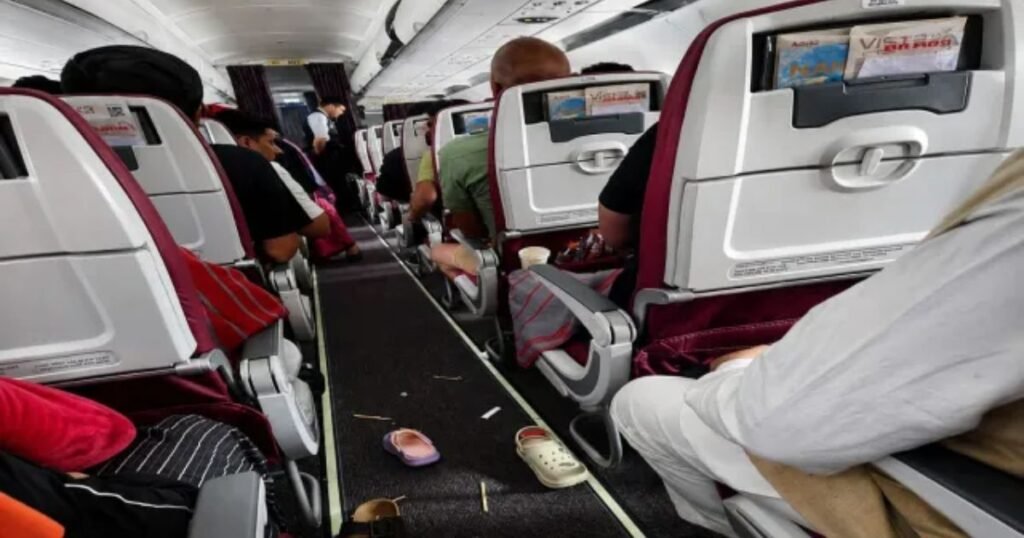
In a shocking revelation that has rocked the Indian aviation industry, the pilot-in-command (PIC) of Air India flight AI-2379 has tested positive for marijuana in a confirmatory drug test. The devastating test result comes just days after the Airbus A320neo, traveling from Phuket to New Delhi, experienced a terrifying 300-foot plunge mid-air, causing severe injuries to 13 passengers and four crew members.
The Ministry of Civil Aviation has summoned Air India’s outgoing CEO, Campbell Wilson, demanding a detailed explanation, as investigations uncover a chaotic sequence of mechanical failures and alleged pilot negligence in the cockpit.
Inside the Cockpit: The 300-Foot Plunge
The horrifying incident occurred on August 4, 2026, while the aircraft, carrying 137 passengers and eight crew members, was flying over the eastern state of Odisha.
According to an internal Air India Flight Safety report accessed by media sources, the crisis began with the captain standing outside of his seat. He was reportedly standing behind the first officer (co-pilot), discussing the aircraft’s air conditioning system, when the plane’s electronic monitors erupted with simultaneous aural and visual stall warnings.
The autopilot abruptly disengaged, and the nose of the Airbus pitched up dangerously.
The first officer, who was physically at the controls, executed standard stall-recovery procedures by forcefully pushing the nose down to gain airspeed. However, the maneuver caused a sharp “negative-g excursion.” The aircraft plunged so violently that it accelerated downward faster than gravity, momentarily creating a weightless environment inside the cabin.
Everything not strapped down-including the standing captain, cabin crew, and passengers-floated violently upward before crashing back down. The captain’s account details him scrambling diagonally across the weightless cockpit to strap himself into his seat before shouting, “I have controls,” pushing the throttle to maximum continuous thrust to arrest the terrifying 300-foot descent.
Cascading Mechanical Failures
While the stall recovery maneuver saved the aircraft from a catastrophic crash, engineering logs reveal a deeply troubling underlying mechanical failure.
Within the same minute of the plunge, the Airbus A320neo registered low pressure across its Green, Blue, and Yellow hydraulic systems. Hydraulic systems are the vital lifelines of an aircraft, controlling the landing gear, brakes, and pitch control (the ability to raise or lower the nose). Losing pressure across all three independent, backup hydraulic systems is an extraordinarily rare and severe failure, which investigators believe directly caused the autopilot to disconnect and the plane to pitch up uncontrollably.
Despite the terrifying plunge, the pilots managed to stabilize the aircraft, notifying Kolkata Air Traffic Control and opting to continue the flight to New Delhi. The captain entered the cabin to inspect the damage, finding several passengers and crew members suffering from serious orthopaedic injuries, and requested ambulances to meet them on the runway upon landing.
The Marijuana Revelation
Following standard aviation protocols for serious mid-air incidents, both pilots were subjected to mandatory breathalyzer and psychoactive substance screenings upon landing at Delhi’s Indira Gandhi International Airport. While both cleared the alcohol tests, the captain’s initial and subsequent confirmatory blood and urine tests came back positive for marijuana. The first officer’s tests returned entirely clear.
Both pilots have been immediately de-rostered pending the investigation.
Aviation experts note that standard penalties for first-time drug offenders in the cockpit involve a mandatory stint in a rehabilitation center and a six-to-eight-month grounding. However, given the severe injuries sustained during the flight, multiple sources indicate the captain is likely facing outright termination by Air India and a potential lifetime flying ban.
“He cannot be playing with people’s lives,” stated Captain CS Randhawa, president of the Federation of Indian Pilots. “Knowing Air India and their zero tolerance towards such things, he will get terminated.”
Government Steps In
The Directorate General of Civil Aviation (DGCA) and the Aircraft Accident Investigation Bureau (AAIB) have launched a massive, high-level probe into the incident. The AAIB is receiving technical assistance from Airbus and France’s aviation safety agency (BEA) to decode the complex hydraulic failures.
Civil Aviation Minister Ram Mohan Naidu held an urgent meeting with Air India CEO Campbell Wilson on Tuesday. Speaking to the press, Naidu issued a stern warning: “If the pilot is found to have indulged in any substance abuse, it would be treated very seriously. There shouldn’t be any compromise from any side… If there needs to be any tweaking of the existing legislation, we will do that also.”
As the AAIB systematically reviews flight data recorders, medical information, and maintenance logs, the passengers of flight AI-2379 are left demanding answers as to how a commercial jet was compromised by both critical mechanical failures and a pilot allegedly flying under the influence.
Get in Touch with India Prime Times
For any updates, queries, or to publish a news article, please reach out to our editorial desk:
- Contact Number: +91 9490056002
- Email ID: info@indiaprimetimes.com
- WhatsApp Us: https://wa.me/919490056002