
The Blueprint of Tomorrow: How Udaipur’s JPC Homes is Engineering a New Era of Structural Aesthetics in India
4 min read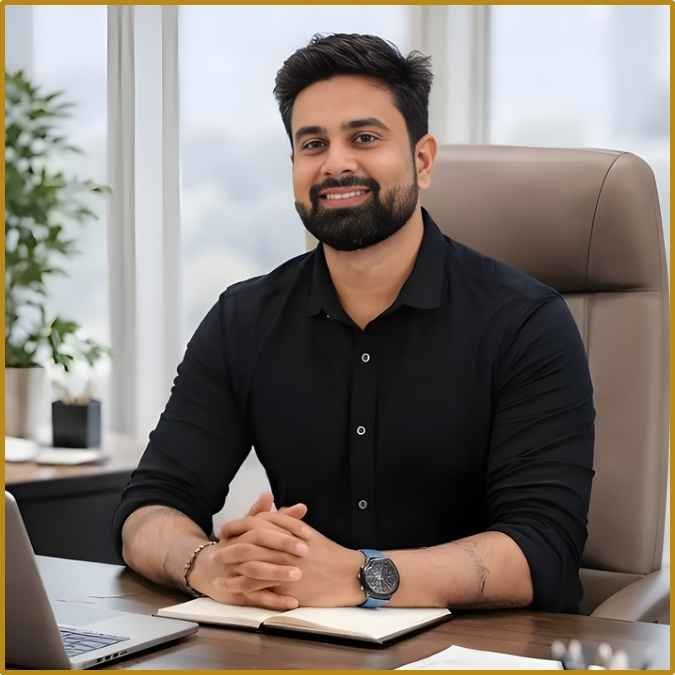
The Indian real estate and construction sector is experiencing a massive decentralization. For decades, architectural innovation was largely confined to major metropolitan hubs. However, the current narrative of urban development is being aggressively rewritten in India’s Tier-2 cities. As homeowners and commercial developers increasingly demand luxury, sustainability, and turnkey execution, regional architectural studios are stepping up to deliver world-class infrastructure.
To understand this shifting dynamic in regional urban development, the India Prime Times editorial team recently traveled to the heritage city of Udaipur. While investigating the region’s rapidly modernizing skyline, we had the distinct opportunity to observe the operations at JPC Homes – Architecture & Interior Design Studio.
It was during this on-ground coverage that our team met with Er. Jayesh Udawat, the Founder and Principal Architect of the firm. Walking through several of their live construction sites, we noticed the exceptional quality, structural discipline, and nuanced design of his work. Intrigued by the seamless integration of heavy engineering and refined aesthetics, our team sat down for an in-depth conversation with Er. Jayesh Udawat to decode the operational strategies driving one of Rajasthan’s most prolific design studios.
The Engineering-Architecture Synthesis
A recurring challenge in the Indian construction industry is the frequent disconnect between the architect’s creative vision and the civil engineer’s structural realities. This fragmented approach often leads to budget overruns, delayed timelines, and compromised building integrity.
During our conversation, it became evident that the success of JPC Homes lies in actively bridging this exact gap. Founded in 2012, the firm was built on Er. Udawat’s unique multidisciplinary foundation. Holding a degree in Civil Engineering, he transitioned into architectural and structural design with a distinct advantage: the ability to merge creative spatial planning with absolute technical and structural precision.
“Architecture shouldn’t just be about building visually striking structures; it must be about enhancing lifestyle while ensuring uncompromising durability,” Er. Udawat shared with the India Prime Times team. “When the person designing the elevation also understands the precise load-bearing mechanics of the foundation, you eliminate friction. The result is a space that is future-ready, cost-effective, and safe.”
This dual-expertise model has proven highly effective. Under his leadership, JPC Homes has successfully delivered over 800 residential, commercial, and hospitality projects over the last 14 years. By offering end-to-end solutions-spanning architectural planning, structural design, 3D visualizations, and turnkey construction compliant with RERA norms-the firm has established a formidable track record of transparency and reliability in a notoriously unpredictable market.
Aesthetic Leadership and Functional Design
While structural safety forms the backbone of JPC Homes, the firm’s visual language is equally compelling. The studio’s design ethos has been significantly elevated by its core leadership, notably Ar. Deepti Jain, who joined the firm in 2023.
An alumnus of the Aayojan School of Architecture (ASA) in Jaipur and a registered architect with the Council of Architecture (India), Ar. Jain brings a refined, user-centric approach to the firm’s portfolio. With half a decade of cross-sector experience, her focus lies in material coordination and creating elegant, highly practical spaces.
Our editorial team noted that modern Indian architecture is increasingly demanding a balance between contemporary global trends and traditional Indian spatial philosophies. Ar. Jain has been instrumental in executing this balance, taking projects from conceptual sketches to final execution with a keen eye for functional planning. Her impactful contributions to the field have not gone unnoticed by the wider industry, recently earning her the prestigious Women of Substance Award.
Vastu, Light, and Landscape: The Signature Approach
During our tour, our team analyzed several of the firm’s signature projects, which serve as excellent case studies for modern regional architecture. Two distinct properties-the Kadamb Residence and the Aakar Farmhouse in Udaipur-highlight the studio’s core design philosophy.
In the luxury residential sector, the Kadamb Residence showcases a seamless integration of Vastu-compliant planning with ultra-modern lifestyle design.
Rather than treating Vastu as a restrictive set of rules, the studio utilizes it as a framework to optimize natural light, cross-ventilation, and spatial harmony. Similarly, the Aakar Farmhouse demonstrates an advanced understanding of landscape integration. The structure does not impose itself on the surrounding environment; rather, it is designed to invite nature indoors, utilizing expansive visual corridors and sustainable material palettes.
These projects underscore a vital industry trend: today’s property owners are moving away from closed-off, heavily compartmentalized homes. They seek breathable, naturally illuminated, and energy-efficient spaces-a demand that JPC Homes is consistently meeting through its innovative blueprints.
Industry Recognition and a Pan-India Vision
The comprehensive, client-centric approach championed by Er. Jayesh Udawat and Ar. Deepti Jain is currently generating significant momentum in national architectural circles. Marking a major milestone for the firm this year, both leaders have been honored at the National Architecture & Interior Design Excellence Awards 2026. This high-level recognition validates their commitment to balancing design excellence with structural strength.
As our conversation with Er. Udawat concluded, the roadmap for the future became clear. While Udaipur remains the foundational heart of the studio, the demand for their holistic, turnkey methodology is expanding.
JPC Homes is currently scaling its operations, bringing its unique blend of civil engineering discipline and architectural elegance to a Pan-India clientele. For the broader real estate and construction industry, the rise of such multidisciplinary, regional powerhouses signals a deeply positive shift. It proves that the future of Indian urban development will not rely solely on imported ideas or metropolitan mega-firms, but on indigenous studios that understand the delicate balance of culture, climate, and concrete.