
A Diamond-Studded Moon, the Harvest Moon, and a Vanishing Jupiter: September 2026’s Best Astronomical Events
4 min read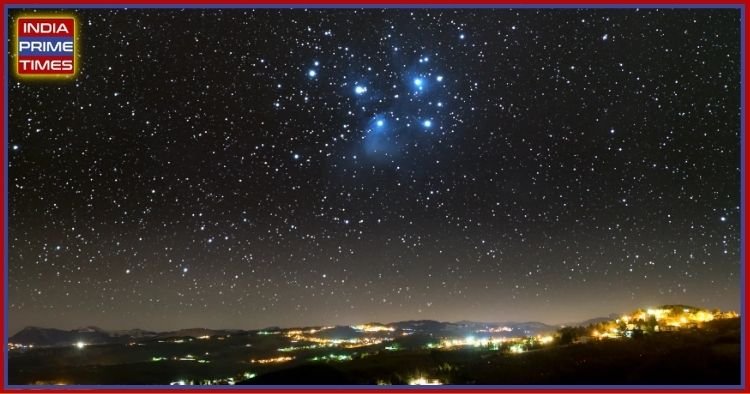
While August captivated stargazers with the Perseids meteor shower, September 2026 is stepping up to deliver its own spectacular celestial show. From the Moon passing directly over Jupiter to the “Diamond Moon” and the iconic Harvest Moon, this month is packed with must-see cosmic events.
Here is your comprehensive guide to the biggest night sky events in September 2026 and exactly when to look up.
September 1 & 2: Venus and Spica Align
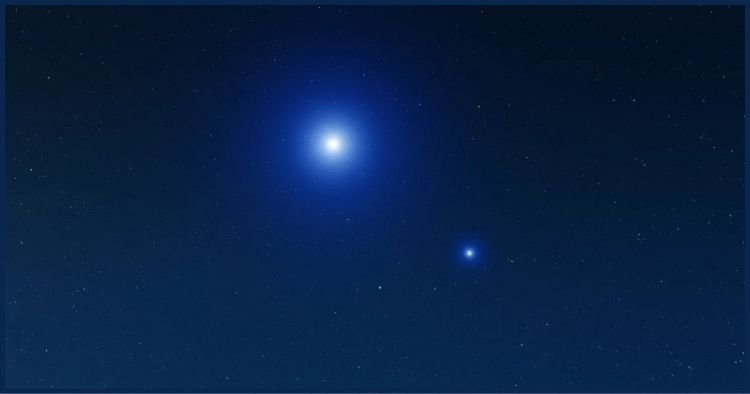
September kicks off with a brilliant pairing visible to the naked eye. Venus, the brightest planet in our night sky, will appear remarkably close to Spica, the most intense star in the constellation Virgo.
How to spot it: Look to the western horizon shortly after sunset. Venus will be unmistakable as a bright, steady white dot. Roughly 1.5 degrees away (about the width of three full moons), you will spot Spica shining as a fainter, bluish dot. The exact conjunction occurs at 00:17 UTC on September 2.
September 3: The “Diamond-Studded” Moon
On the night of September 3, the moon will put on a spectacular visual display alongside the Pleiades star cluster (also known as the “Seven Sisters” or M45).
How to spot it: The 59-percent illuminated moon will pass just 1.1 degrees from the Pleiades. To the naked eye, this cluster of young, hot stars will look like a group of tiny diamonds embedded in the sky right next to the moon. Grab a pair of binoculars for an even more breathtaking, detailed view of the hundreds of stars that make up the cluster. (This event will repeat on September 30).
September 8: The Great Jupiter Vanishing Act
Early risers are in for a rare treat on September 8 when a waning crescent moon passes directly in front of Jupiter, completely hiding the massive gas giant in an event known as an “occultation.”
How to spot it: The close pairing will be highly visible in the eastern sky before sunrise. However, depending on your location, the actual moment Jupiter disappears behind the moon may occur during daylight hours, making it trickier to spot without a telescope.
September 9 & 10: The Epsilon Perseids Meteor Shower
While much smaller than August’s famous Perseids, the Epsilon Perseids meteor shower will peak on September 9 and 10, producing up to eight meteors per hour.
How to spot it: The viewing conditions for this shower are near-perfect, as the peak occurs just two days before a new moon, ensuring exceptionally dark skies. For the best views, head to a dark location far away from city light pollution and look generally toward the constellation Perseus.
September 18–22: Venus at Its Absolute Brightest
While Venus is already easy to spot, it will reach its absolute maximum brightness for the year toward the middle of the month, hitting an apparent magnitude of -4.8 (for context, Sirius, the brightest star, is only -1.46).
How to spot it: Look low on the western horizon just after sunset. The planet will be so dazzlingly bright it will be impossible to miss, although it will begin sinking lower into the twilight as the month ends.
September 23: The Autumnal Equinox
While not an event you can strictly “see,” September 23 marks a massive astronomical milestone. At 8:05 p.m. ET, the Sun will cross the celestial equator moving southward. This exact moment marks the astronomical end of summer and the beginning of fall in the Northern Hemisphere (and spring in the Southern Hemisphere).
September 26: Neptune Reaches Opposition
Neptune, the most distant planet in our solar system, will reach “opposition” on September 26. This means Earth will be positioned directly between Neptune and the Sun, making the ice giant visible for most of the night and bringing it to its closest point to Earth for the year.
How to spot it: Neptune is too faint to be seen with the naked eye. You will need a telescope and a sky map pointing toward the constellation Pisces to spot the tiny, unmistakable bluish disk.
September 26: The Harvest Moon Rises
Closing out the month is the highly anticipated Harvest Moon. Traditionally, the full moon occurring closest to the autumnal equinox is named the Harvest Moon, as its bright light historically allowed farmers to work late into the night harvesting their summer crops.
How to spot it: The moon will reach peak illumination at 12:49 p.m. ET. For the most cinematic view, look toward the eastern horizon just as the sun sets. As a bonus, the ringed planet Saturn will be shining visibly nearby!
Get in Touch with India Prime Times
For any updates, queries, or to publish a news article, please reach out to our editorial desk:
- Contact Number: +91 9490056002
- Email ID: info@indiaprimetimes.com
- WhatsApp Us: https://wa.me/919490056002