
Telegram Ban Sparks Legal Battle in India Ahead of NEET-UG 2026 Re-Exam; Supreme Court Defers Re-Test Challenge
4 min read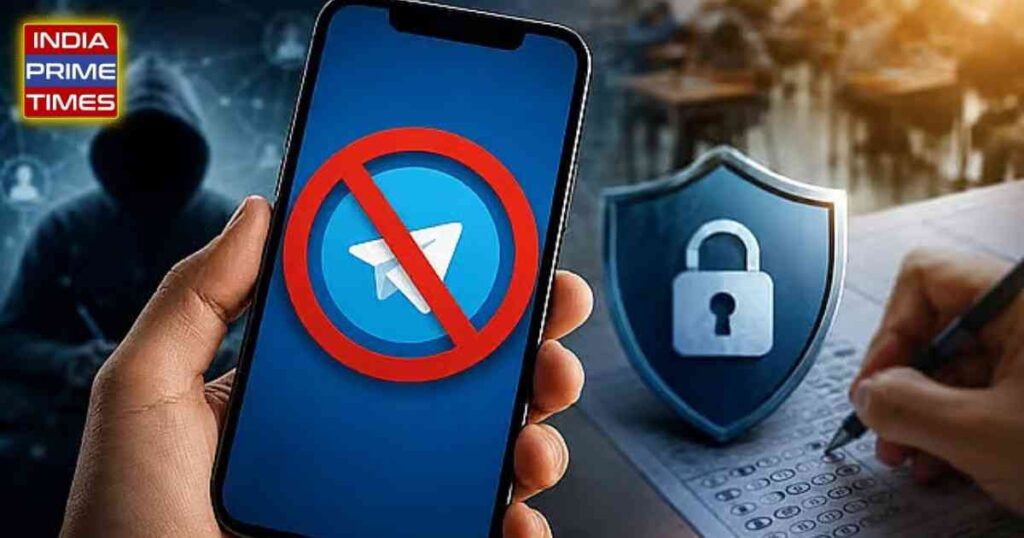
New Delhi, June 18, 2026: Just days before nearly 22 lakh medical aspirants are set to reappear for the National Eligibility-cum-Entrance Test Undergraduate (NEET-UG) 2026, a major controversy has erupted over the Indian government’s temporary restrictions on Telegram. The messaging platform has moved the Delhi High Court challenging the government’s decision, arguing that the move unfairly impacts millions of legitimate users while failing to address the root cause of examination fraud.
The development comes amid heightened scrutiny of India’s examination system following allegations of a nationwide NEET paper leak that led to the unprecedented cancellation of the May 3 examination and a fresh test scheduled for June 21.
Why Has Telegram Been Restricted?
The Ministry of Electronics and Information Technology (MeitY), acting on recommendations from agencies involved in the NEET investigation, directed temporary restrictions on Telegram ahead of the re-examination.
According to authorities, several Telegram channels, groups, and automated bots were allegedly being used by organized cheating networks to circulate false claims, leaked examination materials, and fraudulent schemes targeting anxious candidates and their families.
The National Testing Agency (NTA), which conducts NEET-UG, stated that the decision was aimed at safeguarding the integrity of the examination process. Officials alleged that certain criminal groups were exploiting Telegram’s large public channels and message-editing features to spread misinformation and fabricate evidence related to paper leaks.
The restrictions are expected to remain in force until shortly after the NEET-UG re-test.
Telegram Challenges Government Decision
Telegram has strongly opposed the move and has approached the Delhi High Court seeking relief.
Telegram founder and CEO Pavel Durov criticized the restriction, describing it as a counterproductive measure that would inconvenience millions of users without effectively stopping those involved in the alleged leak.
Durov argued that individuals engaged in illegal activities can easily migrate to alternative platforms, making a blanket restriction ineffective. He further stated that Telegram has proactively removed hundreds of channels involved in sharing leaked examination content and examination-related scams in India over the past several weeks.
The company also highlighted ongoing efforts to strengthen transparency measures on the platform, including improvements designed to make edited messages more clearly identifiable.
NEET-UG 2026: What Led to the Crisis?
NEET-UG is India’s largest medical entrance examination and serves as the gateway to undergraduate medical admissions across the country.
This year, approximately 22.8 lakh candidates appeared for the examination conducted on May 3 at thousands of centers nationwide.
However, allegations soon emerged that examination papers had been leaked before the test. Following mounting public pressure, protests from students and parents, and preliminary findings from investigative agencies, the NTA cancelled the examination on May 12 and announced a nationwide re-test.
The case was subsequently handed over to the Central Bureau of Investigation (CBI), which has arrested multiple individuals as part of its ongoing probe into the alleged leak network.
Massive Security Measures for the Re-Examination
To restore confidence in the examination process, authorities have reportedly introduced one of the most extensive security arrangements ever implemented for a national entrance examination.
Reports indicate that examination papers will be transported under enhanced security protocols, with support from specialized logistical arrangements and close monitoring by central and state agencies.
The NTA has also intensified surveillance of online platforms, social media groups, and messaging services to identify attempts at examination fraud or misinformation campaigns targeting candidates.
Officials maintain that no authentic question paper exists outside the secured examination chain and have warned students and parents against falling victim to scammers demanding money in exchange for purported access to leaked papers.
Digital Rights Groups Raise Concerns
While authorities defend the restriction as necessary, digital rights advocates and technology experts have questioned whether banning a communication platform is an effective response.
Critics argue that examination leaks typically originate from weaknesses within the examination ecosystem itself, including printing, transportation, storage, and administrative processes. They contend that restricting access to a widely used communication platform may inconvenience millions of law-abiding users without eliminating the underlying vulnerabilities.
Several experts have also pointed out that similar activities can easily shift to other messaging applications and online platforms, making platform-specific restrictions only a temporary solution.
Students have expressed mixed reactions. While some support strong action against examination fraud, many rely on Telegram for study groups, educational content, doubt-clearing sessions, and exam preparation resources.
Supreme Court Defers Hearing on NEET Re-Test Challenge
In a related development, the Supreme Court has postponed hearing a petition challenging the NTA’s decision to conduct the NEET-UG 2026 re-examination.
The plea was filed by Dr. Mangala Kohli, former Assistant Director General of Health Services (DGHS), who argued that cancelling the entire examination unfairly penalizes lakhs of genuine candidates who had no connection to the alleged malpractice.
The petition contends that while those responsible for examination fraud should face strict legal action, honest students should not suffer due to administrative failures.
However, the matter has now been deferred until July, after the Supreme Court resumes regular sittings. Since the re-test is scheduled for June 21, the hearing is likely to occur after the examination has already been conducted, significantly reducing the practical impact of the petition.
Bigger Questions About India’s Examination System
The NEET controversy has once again reignited a national debate over the security and credibility of high-stakes competitive examinations in India.
Education experts note that repeated allegations of paper leaks, irregularities, and examination fraud over recent years have raised concerns about systemic weaknesses in examination management and oversight.
Many observers believe that while technological monitoring and law enforcement action are important, long-term reforms will require stronger security protocols, greater accountability, enhanced transparency, and modernization of examination infrastructure.
As millions of aspiring doctors prepare for the June 21 re-test, the coming days are expected to be crucial not only for the future of the candidates but also for public confidence in India’s examination system.
For News Updates, Queries, or Publishing News Articles
📞 Contact: +91 9490056002
📧 Email: info@indiaprimetimes.com
📱 WhatsApp Us: https://wa.me/919490056002