The Ultimate Fracturing of Trinamool: 20 Lok Sabha MPs Revolt Against Mamata Banerjee as Defection Dilemma Moves to Parliament
4 min read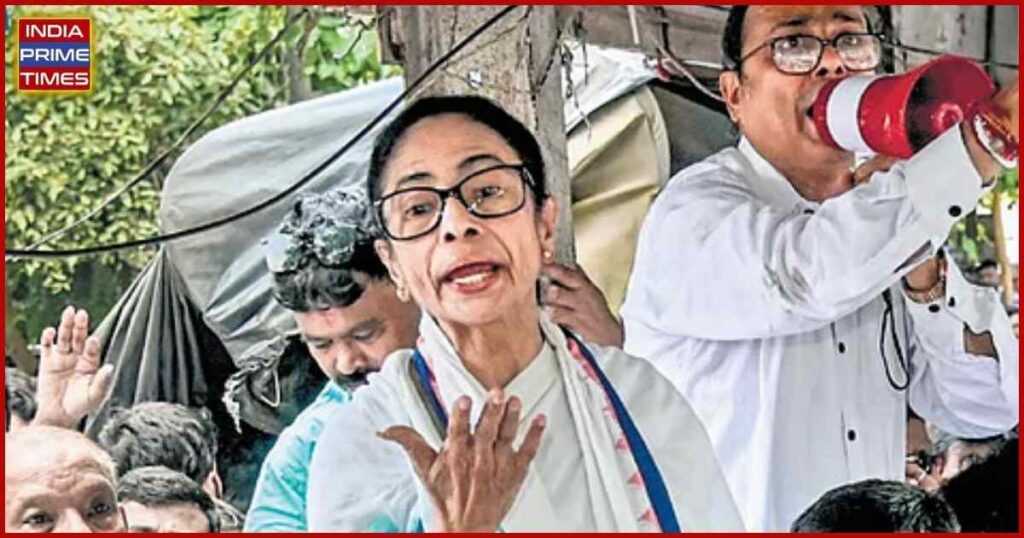
A massive political crisis has gripped the All India Trinamool Congress (TMC) as a sweeping rebellion by its parliamentary wing threatens to split the party entirely. Barely a month after being voted out of power in the West Bengal assembly elections, the party faces an existential threat at the national level. At least 20 of Trinamool’s 28 Lok Sabha Members of Parliament, led by senior leader Kakoli Ghosh Dastidar, have formally written to Lok Sabha Speaker Om Birla, expressing their intent to break away from the party and extend external support to the Bharatiya Janata Party-led National Democratic Alliance (NDA) bloc.
The escalating coup marks the sharpest challenge to the authority of party founder Mamata Banerjee since the party’s inception. Deserted party offices, localized structural collapses, and public recriminations have now reached the nation’s capital, leaving political analysts questioning whether the firebrand regional leader can retain control over her remaining lawmakers.
The Anatomy of a Revolt: “The Leader Had Changed”
The face of the parliamentary rebellion became clear when senior actor-turned-politician Satabdi Roy, a four-time MP who has been a core pillar of the party since 2009, was appointed as the deputy leader of the dissident group. Speaking out on the systemic disillusionment within the ranks, Roy noted that internal resentment had been compounding for years.
“The leader had changed completely over the past few years,” Roy stated, using a phrase that translates from her vernacular remarks on the psychological shift within the high command. “I have a deep emotional connection with her, but what ultimately matters to me is the work for my constituency. I am leaving because our voices were consistently left unheard. Only a selective handful of individuals had access to the top leadership while others were fundamentally undermined.”
The sentiment was echoed by senior leader Sukhendu Shekhar Ray, who resigned his Rajya Sabha seat in protest of the party’s governance model. Ray noted that the high command treated the broader legislative wing as “insignificant men,” freezing them out of key decision-making processes. Dissidents have also raised serious concerns regarding unchecked lower-to-higher-level institutional corruption, arguing that the party’s administrative decay directly triggered its defeat in the May 4 assembly elections.
The Legal Crux: The Myth of the Two-Thirds Protection
As the rebel faction attempts to formalize its breakaway in the Lok Sabha, the unfolding battle centers heavily on the mechanics of India’s Anti-Defection Law, enshrined under the Tenth Schedule of the Constitution.
| Parliamentary Metric | Total TMC Seats | Two-Thirds Threshold | Current Rebel Claim |
| Lok Sabha Seats | 28 | 19 | 20 MPs |
While Kakoli Ghosh Dastidar insists she commands the support of 20 MPs-surpassing the legal threshold of 19 required to claim a two-thirds majority-constitutional experts warn that the group remains highly vulnerable to disqualification.
Why a Legislative ‘Split’ is No Longer Valid
Legal scholars point out that the legislative group is operating under a dangerous legal fallacy. A 2004 constitutional amendment explicitly abolished the “one-third split” exception that previously allowed lawmakers to form separate independent blocs. Today, the law recognizes only one defense against disqualification: an absolute organizational merger with another political party.
“The two-thirds number does not mean anything at this stage unless the entire political organization merges with the BJP,” explained former Lok Sabha Secretary General PDT Achary. “MPs alone do not constitute the political party; they are merely a legislative subsection. The party is a much larger organizational entity. If they attempt to sit as an independent separate bloc without an official organizational merger, it constitutes a split, and they are legally liable to be disqualified by the Speaker.”
Senior Advocate Saurabh Kirpal supported this view, noting that recent judicial precedents, including the landmark Shiv Sena rulings, emphasize that an organizational fracture must precede a parliamentary fracture. “By sheer logic, a merger means the blending of corporate entities, not just individuals shifting allegiances. Simply breaking away to form an independent sub-group violates the core spirit of the anti-defection framework,” Kirpal asserted.
TMC Loyalists Strike Back
The remaining loyalists of Mamata Banerjee have launched a fierce counter-offensive from New Delhi, dismissing the rebellion as a fabricated narrative driven by external political maneuvers. TMC Lok Sabha Chief Whip Kalyan Banerjee, alongside MP Kirti Azad, organized a combative press conference accusing the dissidents of outright political betrayal.
“Today, their true leader is Narendra Modi; they have essentially integrated into the BJP,” Kalyan Banerjee remarked, launching a sharp critique against the rebelling minority MPs.
Other loyalist heavyweights, including Krishnanagar MP Mahua Moitra, challenged the ethical validity of the split, noting that the lawmakers won their seats on a clear anti-NDA ticket. Moitra publicly dared the rebel faction to resign their parliamentary seats immediately and contest fresh by-elections under a BJP symbol rather than hiding behind legal technicalities.
The Parallel Crisis in the State Assembly
The parliamentary crisis directly mirrors an identical disaster striking the party back home in West Bengal. In the state assembly, the cracks have widened even further, with a rebel faction consisting of 58 MLAs successfully surpassing the two-thirds threshold of the state’s 80 TMC legislators. This state-level bloc has already succeeded in sidelining the high command’s official nominees, illustrating that the party’s lack of a rigid ideological structure makes it highly volatile the moment state resources are removed.
While Kakoli Ghosh Dastidar remains defiant-asserting that her head may be severed but it will never bow in the fight for Bengal’s regional interests-the coming days will depend entirely on how Lok Sabha Speaker Om Birla interprets the strict definitions of a parliamentary merger versus an illegal legislative split.
Get in Touch with India Prime Times For any updates, queries, or to publish a news article, please reach out to our editorial desk:
- Contact Number: +91 9490056002
- Email ID: info@indiaprimetimes.com
- WhatsApp Us: https://wa.me/919490056002