
US Forces Strike Iranian Radar Sites on Qeshm Island Following Drone Threat in the Strait of Hormuz
3 min read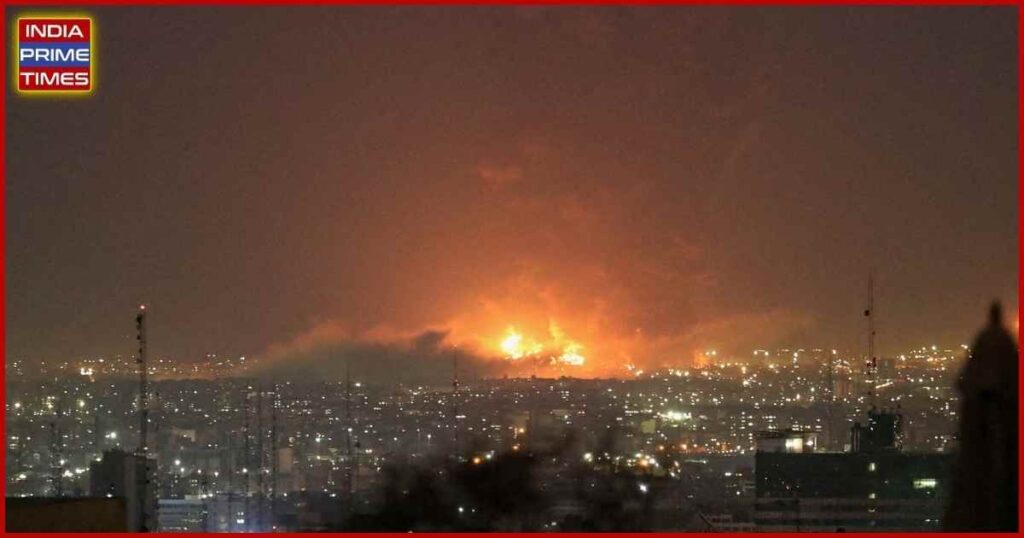
The already fragile ceasefire between the United States and Iran has been severely tested following a rapid exchange of military hostilities in the Persian Gulf. In the early hours of Thursday, the US Central Command (CENTCOM) confirmed it had struck Iranian coastal surveillance radar sites in a calculated “self-defence” operation.
The US retaliatory strikes on Qeshm Island and Goruk occurred after American forces intercepted and shot down four Iranian one-way attack drones that were launched toward the strategic Strait of Hormuz.
The Incident: Drones and Retaliation
According to CENTCOM, the Iranian drones posed an “immediate threat to regional maritime traffic.” US forces swiftly intercepted the unmanned aerial vehicles (UAVs) before launching targeted strikes on the Iranian radar infrastructure that was allegedly guiding them.
“The attack drones posed an immediate threat to regional maritime traffic. US forces subsequently struck Iranian coastal surveillance radar sites in Goruk and on Qeshm Island to defend against further attacks,” CENTCOM said in a statement on X (formerly Twitter).
Adding to the escalating tension, unverified reports have emerged of subsequent explosions and active air defense activity on Kharg Island, a crucial Iranian oil export terminal located in the northern Persian Gulf.
The Wider Context: The Blockade and Economic Squeeze
This latest skirmish is part of an ongoing pattern of tit-for-tat violence that has defined the US-Iran conflict for over three months. The US military currently enforces a strict blockade on Iranian ports, a move implemented to counter Tehran’s chokehold on the Strait of Hormuz-the vital maritime corridor through which a significant portion of the world’s oil and natural gas shipments pass.
The blockade has severely crippled Iran’s economy. According to shipping industry journal Lloyd’s List, Iran’s crude oil exports plummeted by an astonishing 84% in May compared to the previous month. The US Treasury Department recently expanded this economic pressure by launching “Economic Fury,” a campaign targeting Iran’s shadow fleet and the international banking networks allegedly used to disguise Iranian liquefied petroleum gas (LPG) as Omani fuel.
Meanwhile, Iran has sought alternative routes to bypass the blockade, with reports indicating that cargo is increasingly being routed through Iraq’s Umm Qasr port.
Diplomatic Deadlock and Regional Fallout
Despite the escalating violence, US President Donald Trump downplayed the severity of the crisis. Speaking to reporters, Trump insisted that the situation with Iran is “going quite well” and claimed that the US is moving “very fast” toward a resolution. He even suggested that he would be “honored” to meet with Iranian leadership if a deal is reached, though he warned that any Iranian action resulting in the death of US troops would trigger an immediate and aggressive military response.
However, Iranian officials paint a vastly different picture. Mohsen Rezaei, an adviser to Iran’s Supreme Leader, stated that negotiations are currently at a “deadlock” and dismissed the possibility of a direct meeting with Trump. Rezaei also warned that if the US resumes full-scale military operations, Iran will expand the conflict beyond the Persian Gulf to include the Indian Ocean, the Red Sea, and the Mediterranean.
The Lebanon Complication
Efforts to secure a lasting US-Iran peace deal are heavily complicated by the ongoing proxy war in Lebanon. Iran has explicitly tied any agreement with Washington to a permanent ceasefire between Israel and Hezbollah. However, Hezbollah recently rejected a US-brokered truce proposal, demanding a full Israeli withdrawal from Lebanese territory. In response, Israel has intensified its airstrikes in southern Lebanon, issuing new evacuation warnings for several villages.
As the US-Iran war nears the 100-day mark, the delicate balance between military posturing, severe economic sanctions, and stalled diplomatic negotiations threatens to plunge the entire Middle East into a wider, uncontainable conflict.
Get in Touch with India Prime Times For any updates, queries, or to publish a news article, please reach out to our editorial desk:
- Contact Number: +91 9490056002
- Email ID: info@indiaprimetimes.com
- WhatsApp Us: https://wa.me/919490056002