
The West Asia Breakthrough: Trump and Pezeshkian Sign Historic Versailles Treaty to End War and Reopen Strait of Hormuz
4 min read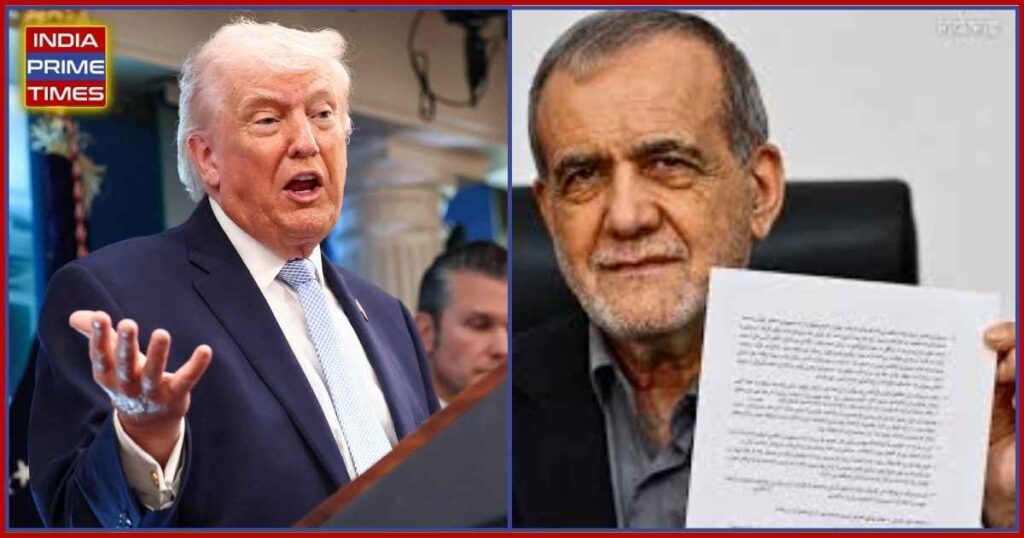
In an extraordinary geopolitical turning point that has reconfigured the global security landscape, United States President Donald Trump and Iranian President Masoud Pezeshkian have signed a landmark 14-point Memorandum of Understanding (MOU), immediately halting nearly four months of devastating direct warfare.
The breakthrough occurred late Wednesday evening at the historic Palace of Versailles, where President Trump added his physical signature to the document during a high-stakes dinner hosted by French President Emmanuel Macron following the G7 summit. Concurrently, President Pezeshkian executed the document in Tehran via an electronic binding mechanism, bypassing the need for a previously scheduled in-person diplomatic summit in Switzerland.
The interim agreement establishes an immediate ceasefire across all regional fronts-including Lebanon-and sets a strict, extendable 60-day diplomatic window to negotiate a comprehensive, permanent peace settlement regarding Iran’s controversial nuclear ambitions.
The 14-Point Mandate: Crucial Clauses of the Truce
The signed framework establishes a rapid, mutual de-escalation sequence aimed at restoring global trade routes and stabilizing the volatile West Asian theater.
- Maritime Blockade and the Strait of Hormuz: The United States has committed to immediately easing its aggressive naval blockade on Iranian ports, promising a full withdrawal of naval restrictions within 30 days. In return, Iran has pledged to use its “best efforts” to ensure the completely free, unhindered, and toll-free passage of commercial vessels through the strategic Strait of Hormuz for the next 60 days.
- The Nuclear Compromise: While Iran has formally “reaffirmed” its long-standing stance that it will not procure or develop nuclear weapons, the most tangible atomic clause requires Tehran to systematically dilute its current 440 kg stockpile of 60% highly enriched uranium-a purity dangerously close to weapons-grade levels. This “down-blending” process is mandated to take place on-site under the direct supervision of the International Atomic Energy Agency (IAEA).
- Economic Relief and Reconstruction: Upon signing, the US Treasury has authorized immediate waivers for the unhindered export of Iranian crude oil, petroleum derivatives, and associated shipping insurance services. Furthermore, the deal proposes a massive $300 billion reconstruction and economic development fund for the battle-torn Islamic Republic, to be structurally financed by regional Gulf Arab states, explicitly exempting the United States from any direct financial contribution.
The Historical Arc: A Century of Tensions
The war, which erupted on February 28, 2026, following a combined pre-emptive assault by US and Israeli forces, resulted in the elimination of Iran’s long-serving Supreme Leader, Ayatollah Ali Khamenei. The conflict rapidly transformed into an economic war of attrition, severely choking global energy shipping and draining billions from national treasuries.
The signing of this treaty marks an unprecedented shift in modern history. For the first time since the 1979 Islamic Revolution and the subsequent 444-day embassy hostage crisis, the executive heads of Washington and Tehran have signed a bilateral document as administrative equals, completely upending decades of containment policies.
Global Market Reaction: Oil Slumps as Tech Surges
The economic impact of the signing was instantaneous across international financial trading floors:
- Brent Crude Tumbles: Global energy benchmarks continued their sharp downward trajectory. Brent crude slipped by 1.6%, trading comfortably at $77.90 per barrel-a significant drop from the $95-to-$100 highs sustained during the peak of the Hormuz blockade.
- Wall Street Gains: President Trump aggressively defended the diplomatic maneuvers against domestic critics via Truth Social, pointing directly to market indicators: “These fools, who think I haven’t been tough enough on Iran, when the Stock Market Just Hit A RECORD HIGH, and Oil prices are ‘tumbling’ down… MAKE AMERICA GREAT AGAIN!”
The Fallout: Political Rifts in Washington and Jerusalem
Despite a collective sigh of relief from international trade bodies, the terms of the Versailles treaty have triggered fierce political backlash:
1. The Republican Rebellion
Several prominent lawmakers within Trump’s own Republican Party have labeled the agreement a historical failure. Republican Senator Bill Cassidy stated: “Iran’s nuclear ambitions were not curbed, and they have learned that threatening the Strait of Hormuz works. This is the worst foreign policy blunder in decades.” Former Vice President Mike Pence echoed the sentiment on X, claiming the framework “smacks of appeasement” and lacks a definitive mandate to dismantle the IRGC’s regional proxy networks permanently.
2. Netanyahu’s Stoic Silence
In Jerusalem, Israeli Prime Minister Benjamin Netanyahu has maintained a glaring, absolute silence since the document was signed. Netanyahu, who had staked his entire political survival on a total military victory and regime change in Tehran, was completely sidelined from the final negotiations.
The inclusion of an immediate termination of military operations in Lebanon has dealt a severe political blow to Netanyahu’s ruling coalition. Far-right National Security Minister Itamar Ben-Gvir publicly revolted against the treaty, stating: “Trump’s agreement does not bind us. We are not partners to this agreement that does not ensure our security.”
3. The Fragile Lebanese Front
While the IRGC-backed Hezbollah movement in Lebanon hailed the treaty as a “great victory,” localized friction persists. Hours after the signing, Lebanon’s state-run National News Agency (NNA) reported sporadic Israeli drone strikes on vehicles in Nabatiyeh, resulting in one fatality. The Israel Defense Forces (IDF) also reported the death of an Israeli soldier due to an explosive drone impact in southern Lebanon, highlighting how easily localized field escalations could compromise the broader diplomatic framework over the next 60 days.
Get in Touch with India Prime Times For any updates, queries, or to publish a news article, please reach out to our editorial desk:
- Contact Number: +91 9490056002
- Email ID: info@indiaprimetimes.com
- WhatsApp Us: https://wa.me/919490056002